

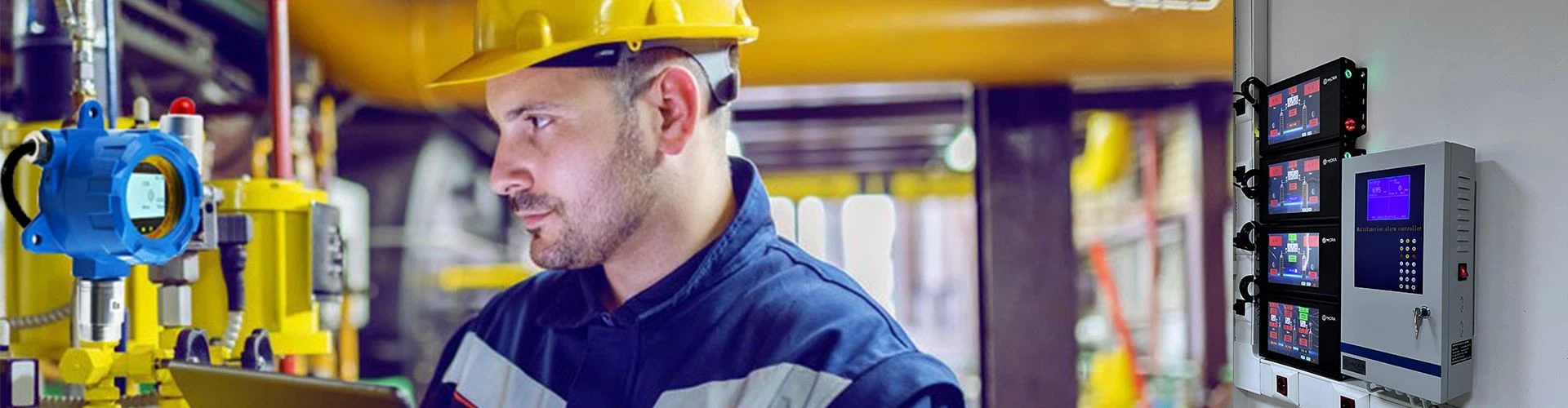





Battery rooms generate hydrogen gas, and different batteries produce hydrogen gas for different reasons. Whether it's traditional valve-regulated lead-acid batteries or emerging lithium-ion batteries, hydrogen gas is produced under certain conditions,so a hydrogen detector is a must.
1.Lead-acid battery:
Under normal conditions: In the normal float charging state, very little gas is generated, and oxygen recombination reactions occur inside the battery.
Risk situation: When overcharged, the electrolyte (dilute sulfuric acid) will be electrolyzed, generating a large amount of hydrogen and oxygen gas. If the battery case is broken or damaged, the safety valve fails, or the ventilation in the machine room is poor, these gases will accumulate in a confined space.
2.Lithium-ion battery:
When thermal runaway occurs (such as overcharging, internal short circuit, external high temperature, etc.), complex chemical reactions will take place inside the battery, decomposing and producing various flammable gases, of which hydrogen is one of the main components, and it is generated at an extremely fast rate, posing high risk. In any case, hydrogen is extremely flammable and explosive.
The explosion limit range of hydrogen in the air is very wide (4.0% - 75.0% vol). When the concentration of hydrogen in the air reaches 4%, it may explode violently upon encountering tiny sparks, static electricity, high-temperature surfaces, or even switching arcs. Human senses cannot detect the leakage and accumulation of hydrogen. Hydrogen is the gas with the lowest density, and it is easily accumulated at the top, corners, and ceilings of enclosed or semi-enclosed spaces, forming an explosive environment.
Safety Risks: Battery rooms are typically enclosed spaces with potentially limited ventilation. If the generated hydrogen gas cannot be promptly and effectively vented, its concentration will continue to rise. Once it reaches the lower explosive limit (4%), any ignition source could trigger a catastrophic explosion and fire, resulting in equipment damage, casualties, and business interruptions. Countries globally mandate the installation of hydrogen concentration monitoring and alarm devices in lead-acid battery rooms/cabinets/areas, which must be integrated with the ventilation system.

3.How to choose a hydrogen detector?
Hydrogen gas detector for battery room measures range from those that detect trace amounts of 0-1000ppm/ 0-2000ppm, to those that detect high concentrations of 0-100% LEL, which is equivalent to 0-4% vol. The lower explosive limit (LEL) for hydrogen is 40,000 ppm (4%). An early warning is given when the concentration reaches 1% LEL (400 ppm), allowing sufficient time to take measures (such as inspection and enhanced ventilation) to prevent the concentration from continuing to rise to dangerous levels or explosion. An alarm at 1000 ppm (0.1%), which is far below the lower explosive limit, serves as a safety warning.
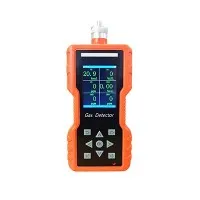
Portable hydrogen detectors with a range of 0-1000ppm or 0-2000ppm, which is highly sensitive and designed to detect minute hydrogen leaks. Before personnel enter the battery room for operation, maintenance, or inspection, they remind operation and maintenance staff to detect leaks early, conduct preventive maintenance to locate the leak, and more accurately pinpoint the source of minor leaks. After initiating ventilation, the portable H2 detector is used to confirm whether the concentration has effectively decreased.
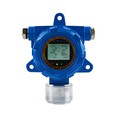
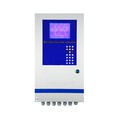
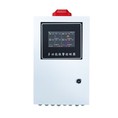
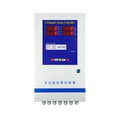
0-100% LEL is commonly used in fixed hydrogen detectors, with the primary alarm point set at 25% LEL and the secondary alarm point set at 50% LEL. This allows for ventilation or linkage control to be initiated before a hazard occurs, which is something that PPM detectors cannot achieve. Fixed hydrogen detectors can continuously and automatically monitor the hydrogen concentration at key locations within the battery room (especially on the roof, in corners, above battery packs, and in ventilation dead zones) 24 hours a day, serving as the core of active safety protection. The 0-100% LEL range is designed to prevent potential explosions caused by high concentrations, and is a must-have in battery rooms. The Fixed h2 detector provides an alert before the concentration reaches a dangerous level, prompting personnel to take measures (such as initiating forced ventilation and evacuating personnel).