







1. Brief introduction:
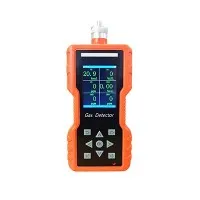
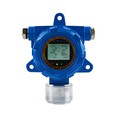
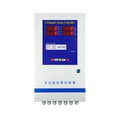
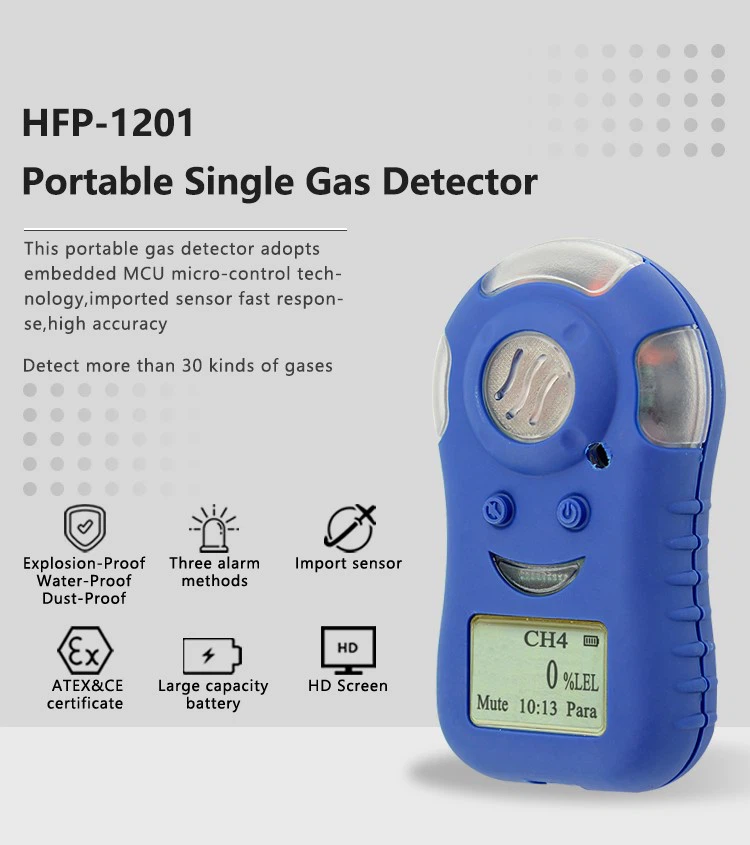
The Portable Hydrogen Sulfide Gas Detector is a compact and easy-to-use device designed for the detection of hydrogen sulfide (H2S) gas in various environments. This instrument can quickly and accurately detect hazardous concentrations of H2S, providing a warning alarm and visual indication of gas concentration levels.
2. Detailed introduction:
The Portable Hydrogen Sulfide Gas Detector features a rugged, yet lightweight design, making it ideal for use in harsh environments. The detector has a large LCD screen for easy reading of gas concentration levels and an adjustable alarm threshold. Additionally, it features a rechargeable battery, which provides extended monitoring time.
3. Products parameters:
|
Name |
Hydrogen Sulfide Gas Detector |
|
Sensor |
Electrochemistry |
|
Detection gas |
Hydrogen Sulfide H2S |
|
Measure range |
0-200ppm,resolution 1ppm |
|
Response time |
≤20s |
|
Display |
LCD large screen display in English |
|
Storage |
Save 3000 alarm records and real time value |
|
Optional |
Software with USB (connect with computer for data analysis and printing) |
|
Features |
With zero setting, alarm point set, can be calibrated, restore factory settings |
4. Detection gas:
|
No |
Detection Gas |
Gas |
Measure Range |
Resolution |
Alarm Point (Low/High) |
|
1 |
Combustible Gas |
EX |
0-100% LEL |
1% LEL |
25 / 50% LEL |
|
2 |
Oxygen |
O2 |
0-30% VOL |
0.1% VOL |
18% / 23% VOL |
|
3 |
Hydrogen Sulfide |
H2S |
0-200 ppm |
0.1 ppm |
10 / 20 ppm |
|
4 |
Carbon Monoxide |
CO |
0-1000/2000 ppm |
1 ppm |
50 / 150 ppm |
|
5 |
Nitrogen Dioxide |
NO2 |
0-20 ppm |
0.1 ppm |
5 / 10 ppm |
|
6 |
Nitric Oxide |
NO |
0-250 ppm |
1 ppm |
25 / 50 ppm |
|
7 |
Carbon Dioxide |
CO2 |
0-5% VOL |
0.01% VOL |
0.2-0.5 VOL |
|
8 |
Sulfur Dioxide |
SO2 |
0-100 ppm |
0.1 /1 ppm |
5 / 10 ppm |
|
9 |
Chlorine |
CL2 |
0-20 ppm |
0.1 ppm |
1/ 2 ppm |
|
10 |
Ammonia |
NH3 |
0-200 ppm |
1 ppm |
35 / 70 ppm |
|
11 |
Hydrogen |
H2 |
0-1000 ppm |
1 ppm |
35 /70 ppm |
|
12 |
Phosphine |
PH3 |
0-1000 ppm |
1 ppm |
5 / 10 ppm |
|
13 |
Hydrogen Chloride |
HCL |
0-100 ppm |
1 ppm |
10 / 20 ppm |
|
14 |
Ozone |
O3 |
0-50 ppm |
0.1 ppm |
5/ 10 ppm |
|
15 |
Hydrogen Flouride |
HF |
0-50 ppm |
1 ppm |
5/ 10 ppm |
|
16 |
Methanol |
CH4O |
0-100 ppm |
1 ppm |
5 / 10 ppm |
|
17 |
Formaldehyde |
HCHO |
0-100 ppm |
1 ppm |
10 / 20 ppm |
|
18 |
Ethylene Oxide |
ETO |
0-100 ppm |
1 ppm |
10 / 20 ppm |
|
19 |
Nitrogen |
N2 |
70-100 VOL |
0.1 VOL |
82/90 VOL |
|
20 |
Organic Compound |
VOC |
0-100 ppm |
1 ppm |
10 / 20 ppm |


5. Application:
The Portable Hydrogen Sulfide Gas Detector is commonly used in industrial settings, including oil and gas exploration, wastewater treatment, mining, and chemical processing. It is also used in HVAC systems and other indoor environments where H2S gas can accumulate.
6. Calibration Procedure:
Step 1: Preparation
Ensure that the detector is turned off and the sensors are clean and dry. Obtain a certified gas cylinder of hydrogen sulfide gas and appropriate calibration gas regulator.
Step 2: Connecting the gas cylinder
Attach the regulator to the gas cylinder and tighten the fitting with a wrench. Connect the regulator to the calibration port on the gas detector.
Step 3: Calibration process
Switch on the detector and allow it to warm up for at least 5 minutes. Choose the calibration option from the menu and select the hydrogen sulfide gas calibration option. Wait for the detector to stabilize and adjust the calibration gas flow rate to the required level.
Step 4: Calibration adjustment
Compare the reading on the detector to the reading on the gas cylinder. If the detector reading is not within the acceptable range, adjust the calibration gas flow rate until the detector reading matches that of the gas cylinder. Repeat the calibration process until the readings consistently match.
Step 5: Finishing calibration
Once the readings match, complete the calibration process by saving the calibration data, switching the detector off, and disconnecting the gas cylinder.
Step 6: Verification
Check the detector performance by exposing it to hydrogen sulfide gas sources of known concentrations. If the detector accurately detects the gas at the required level, the calibration process is complete.
Step 7: Recordkeeping
Keep a record of the calibration data, including the date, calibration gas concentration, and readings on the detector, for future reference.
7. contact us:
E-mail: golf@huafankj.com
WhatsApp/Wechat: +0086 15721910713
Hot Tags: hydrogen sulfide gas detector, China hydrogen sulfide gas detector manufacturers, suppliers


