






First, during the coking process, coal is heated to temperatures exceeding 1000℃, triggering reactions that generate toxic gases: carbon monoxide (CO) and hydrogen (H₂). Hydrogen sulfide (H₂S) is formed when sulfur present in the coal combines with hydrogen at high temperatures; consequently, the higher the sulfur content in the coal, the higher the resulting H₂S concentration. Additionally, other substances such as benzene, ammonia (NH₃), and hydrogen cyanide (HCN) are produced.
Second, the sintering process constitutes the most heavily polluting stage of the operation, generating significant emissions of sulfur dioxide (SO₂) and nitrogen oxides (NOx).
Third, during the blast furnace ironmaking stage, the incomplete combustion of coke at the furnace hearth generates carbon monoxide (CO), along with smaller quantities of H₂S and SO₂.
Finally, in the steelmaking stage, high-pressure oxygen is injected into the molten iron; this triggers a vigorous oxidation of carbon, resulting in extremely high concentrations of carbon monoxide (CO).
Blast Furnace Area: The primary focus is on monitoring for CO leaks near the tuyeres, tapholes, slag notches, and the furnace top charging system. Due to the high-temperature and dusty environment, monitoring is typically conducted using fixed-point detectors or inspection robots.
Converter Furnace Area: Key monitoring points include the oxygen lance and sub-lance insertion ports, as well as the fume hoods and charging ports, to prevent gas leakage.
Coke Oven Area: Monitoring focuses on the concentrations of CO, H₂S, and benzene-series compounds within the coke oven basement (a hazardous/explosive zone) and on the furnace top (specifically at the charging holes and standpipes).
Gas Holders and Pipeline Networks: It is mandatory to monitor both CO concentrations and the oxygen content (O₂) within the gas stream to prevent backfire explosions.
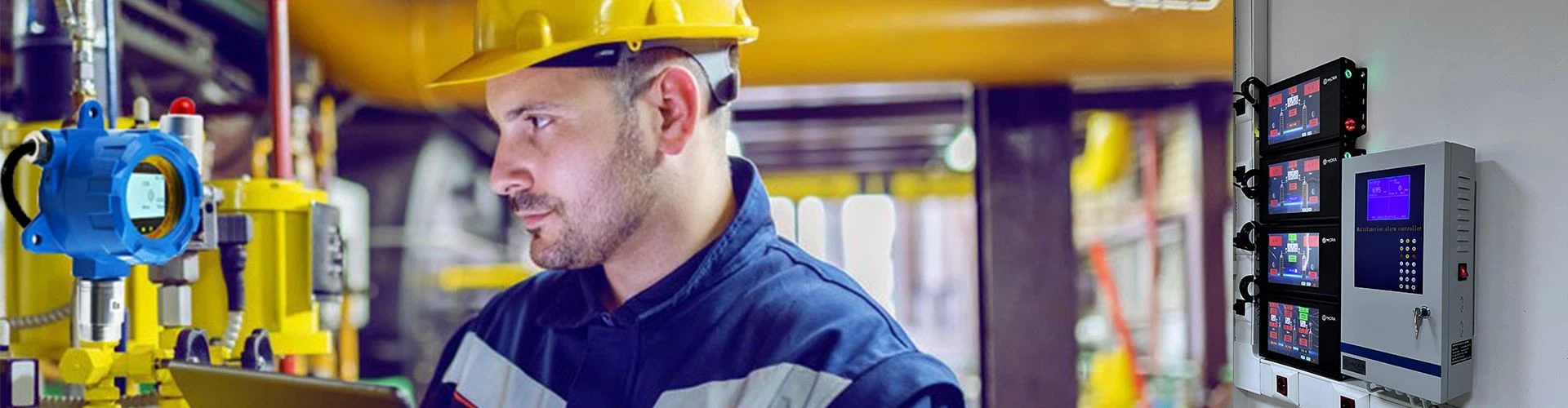
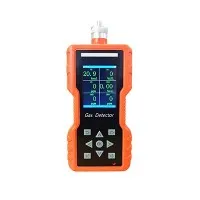
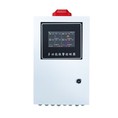
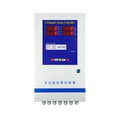
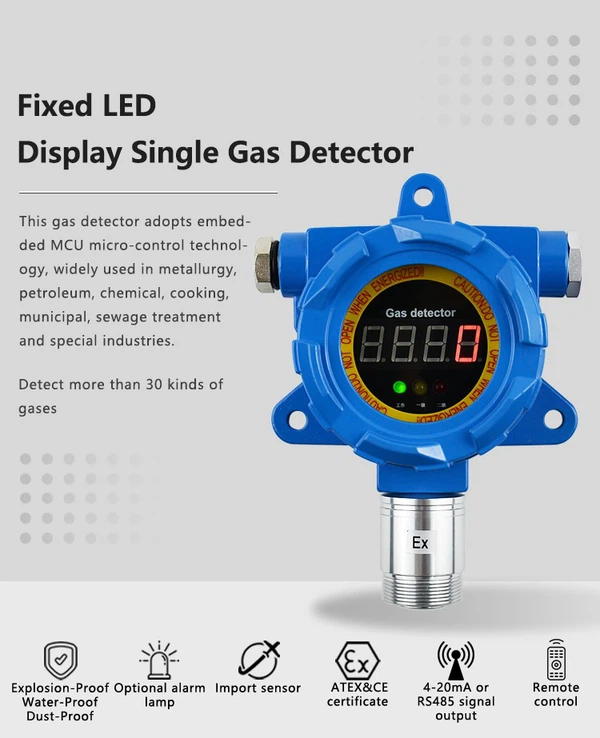
Recommended device: Fixed gas detectors are recommended;like single CO detector,fixed h2s gas detector,ammonia detector, these can be connected to a DCS or PLC system via 4–20 mA or RS485 Modbus outputs. Additionally, portable multi gas detectors capable of sampling and analyzing CO, O₂, H2S, and combustible gases (EX)-are recommended for on-site checking.