

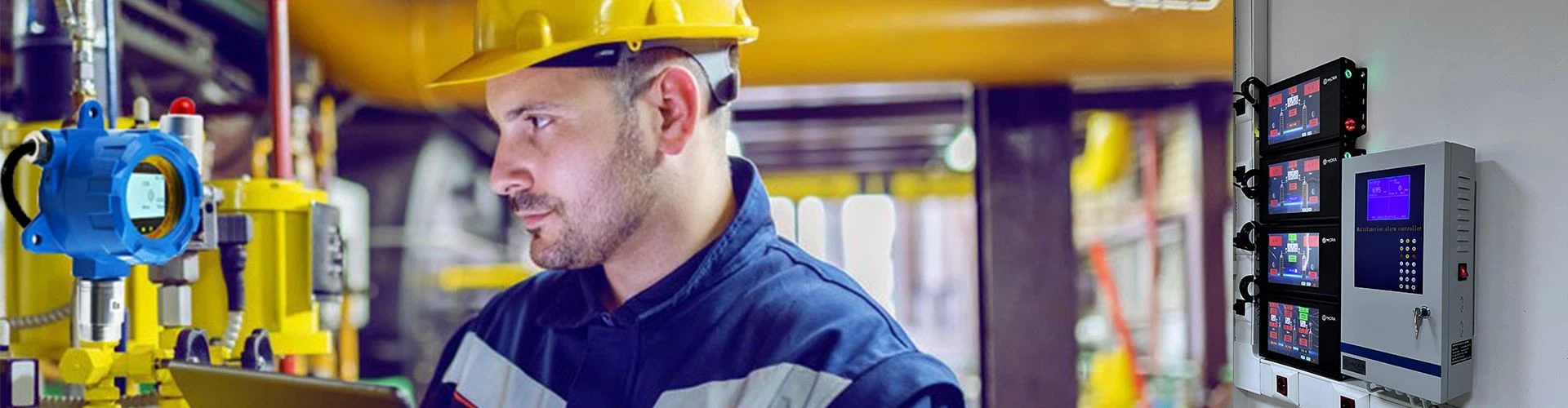


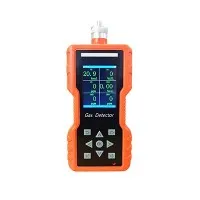



Gas detectors are critical equipment for ensuring the safety of personnel during operations; improper use can lead to misinterpretation or even hazardous situations. The following are key considerations that must be checked during use:
1. Critical Life Safety Principles
(1). Instruments have specific detection ranges, response times, and potential failure modes; even if the readings appear normal, basic protective measures and proper ventilation must still be maintained.
(2). Some gas detector may lock onto a maximum value or appear to freeze when gas concentrations exceed their detection range, failing to automatically return to zero. You should periodically perform a manual zeroing or restart the device to verify its functionality.
(3). Do not confuse "no response" with "device not powered on."
Before every use, the instrument must be powered on in a clean-air environment; verify that the self-test passes, and check for audible alarms or display anomalies to ensure proper operation.
2. Pre-Use Preparations
(1).Verify compatibility with the target gas:Catalytic combustion sensors detect combustible gases but are sensitive to and easily poisoned by silicon, lead, and sulfur compounds. Electrochemical sensors detect toxic gases; but need to care about avoid cross-interference (e.g., between H2S and SO₂).
(2).Battery and calibration checks: Low battery power can result in artificially low readings. Recalibration is mandatory if the calibration validity period (typically one year) has expired, or if the device has recently been exposed to high concentrations of gas.
(3).Sensor lifespan: Typical lifespans are: 1-3 years for catalytic combustion sensors, 2years for electrochemical sensors, Use time based on gas leak frenquency and alarm situation. Replace sensors before their expiration date.
3. Precautions During Use
(1). Sampling Method
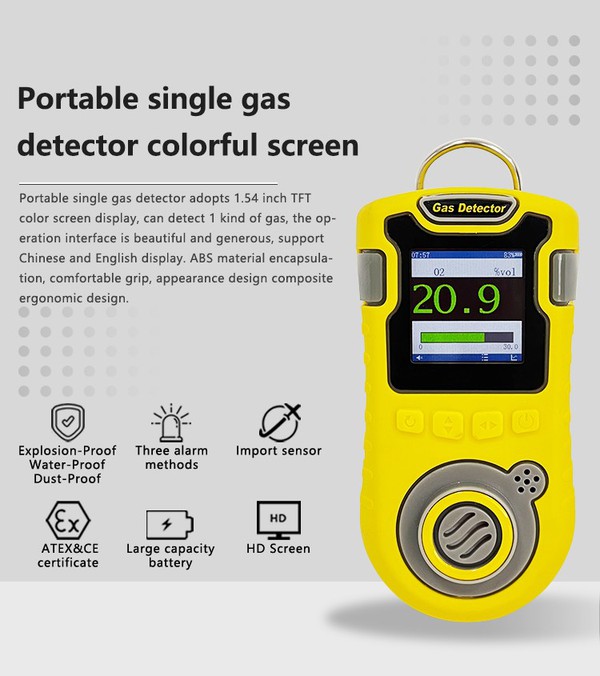
Diffusion Type: The gas detector must be placed directly within the environment being monitored; do not cover the sensor inlet with plastic film or similar materials.
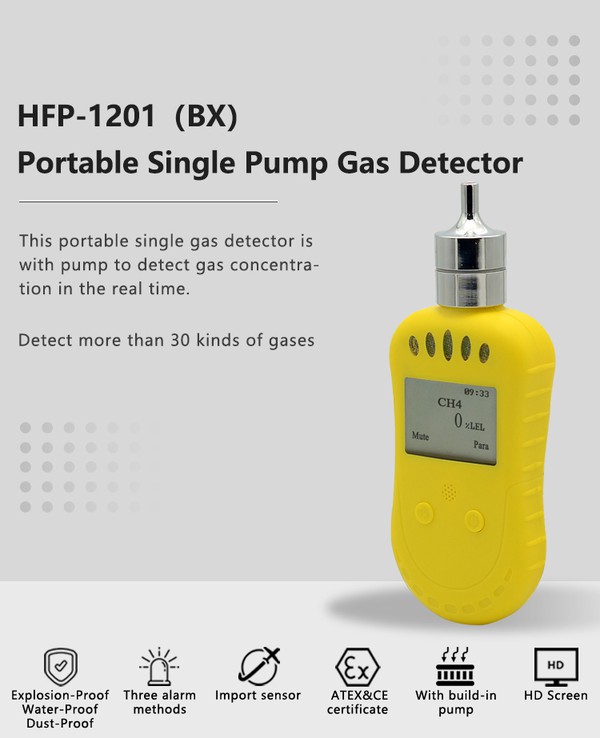
Pump-Suction Type: Check the pre-filters for water or dust accumulation, and ensure the sampling tubing is not kinked or bent. The sampling distance must not exceed the limits specified in the user manual (typically ≤ 30 meters).
(2). Environmental Interference
Temperature and Humidity: Operating outside the specified temperature and humidity ranges (e.g., below -20°C or above 95% RH) can significantly compromise measurement accuracy.
High Background Gas Concentrations: Exposure to high concentrations of background gases (e.g., heavy fumes from alcohol or paint) may cause the sensor to become saturated; allow sufficient time for the sensor to recover before resuming measurements.
(3).Common Misconceptions
Detecting an odor while the instrument displays 0 → The instrument may lack detection capabilities for that specific gas, or the sensor may have failed.
Assuming absolute safety simply because the reading is 0 → A hazardous concentration exceeding the instrument's detection limit may still be present (e.g., the CO alarm threshold is 35 ppm; if the instrument displays 0.0 ppm, the actual concentration could still be 8 ppm).
Using a single-gas detector to measure multiple gases → This can never serve as a substitute for a multi-gas detector.
4. Post-Use and Maintenance
A,Timely Charging: NiMH batteries exhibit a "memory effect," whereas lithium-ion batteries do not; however, both types should be protected against over-discharge.
B,Regular Bump Testing: It is highly recommended to perform a quick verification-using a standard gas of known concentration- before every use to ensure the instrument responds correctly. If full calibration is not feasible, perform a bump test at least once a month.
C,Do Not Disassemble: Never attempt to disassemble the device yourself; doing so-especially with explosion-proof models-will compromise the integrity of its explosion-proof structure.
D,Cleaning and Storage: If the sensor's air intake becomes clogged, use a soft-bristled brush to clean it. Store the device in a clean, dry environment at room temperature, away from organic solvents.
5. Tips for Special Scenarios
A,Confined Spaces The gas detector must be equipped with a pump-suction mechanism and a long sampling tube; ensure that no sample gas becomes trapped within the tubing.
B, Special Gases (e.g., Hydrogen, Acetylene): Select a gas detector equipped with specialized sensors (e.g., thermal conductivity sensors or poison-resistant sensors).
C, Exposure to High Concentrations: If the device is inadvertently exposed to a high concentration of gas (e.g., CO) that exceeds its measurement range, the sensor's zero point may drift; the device must then be recalibrated.
6. Selection and Purchasing Advice
A,Do not blindly pursue "all-in-one" solutions. The sensors within a multi-gas detector may interfere with one another; separate, single-gas detectors are often more reliable.
B,When purchasing, verify the presence of two key certifications: a Certificate of Approval for Measuring Instruments and an Explosion-Proof Certificate(the latter is mandatory for use in hazardous environments).
Finally, keep this practical rule in mind:if the gas detector suddenly triggers an alarm-even if you feel physically fine-prioritize immediate evacuation over analysis. At all times, human life takes precedence over instrument readings.