



With the advancement and development of modern science and technology, pharmaceutical technology is also constantly evolving, and medicine is indispensable to our lives. However, the pharmaceutical production process involves chemical synthesis, biological fermentation, and extraction, which require the use of various hazardous chemicals, including highly toxic chemicals. To ensure worker safety, the use of gas detectors in pharmaceutical factories is essential, and establishing a comprehensive hazardous gas detection and safety control system is crucial.
The pharmaceutical production process uses aliphatic and aromatic hydrocarbons, common alcohols, ketones, and esters. Common gases include methane, ethane, ethanol, ethyl acetate, benzene, toluene, and xylene. These gases are used in large quantities and are highly hazardous, with many exhibiting flammable and explosive properties.
Biological fermentation products are experiencing rapid development in the 21st century, but fermentation metabolites are released in exhaust fumes, accompanied by unpleasant odors. The concentration of pharmaceutical ingredients or derivatives in the air continues to rise, which in turn poses a threat to humans and the environment.

Toxic and foul-smelling gases such as ammonia and hydrogen sulfide are also produced during the pharmaceutical production process.
The "GB 37823-2019 Pharmaceutical Industry Air Pollutant Emission Standard" specifies air pollutant emission limits for the pharmaceutical industry, primarily monitoring particulate matter, NMHC, TVOC, benzene series, phosgene, hydrogen cyanide, benzene, formaldehyde, chlorine, hydrogen chloride, hydrogen sulfide, and ammonia.
In short, various gases are involved in pharmaceutical production and processing, whether in experiments, production, daily life, management, or sterilization. Some of these gases have combustion and explosion properties. When the leaked concentration reaches the lower explosion limit, they are very likely to combust and explode when exposed to open flames and heat sources. Some are harmful to the human body. When inhaled, they can cause irritation to the skin and mucous membranes, or even organ damage or even death. The use of gas detectors in pharmaceutical factories can provide a certain level of early warning of gas leaks and effectively reduce the occurrence of dangerous accidents.
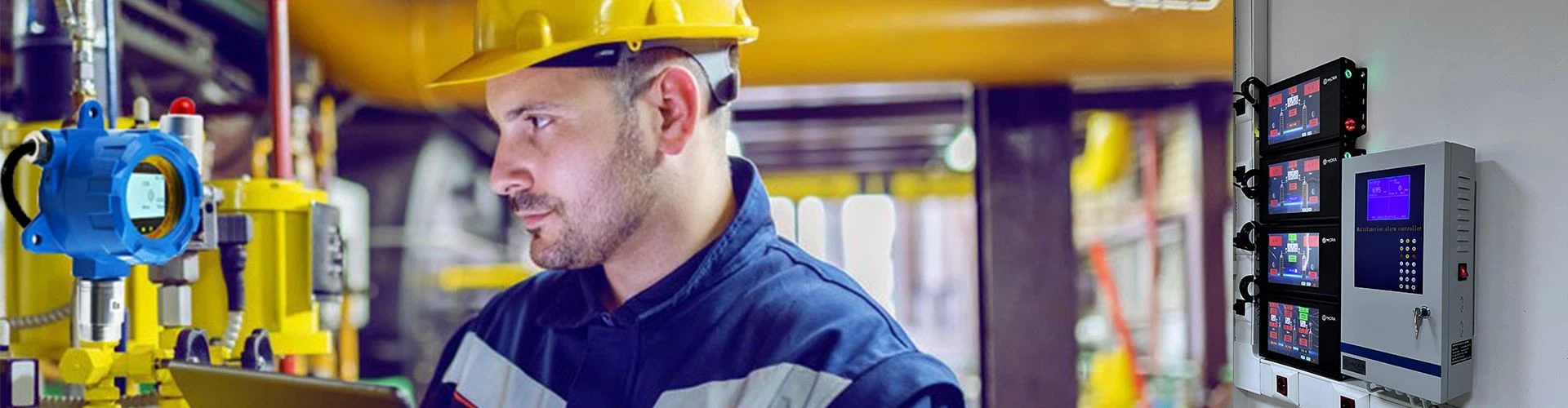
Huafan Technology's gas detectors can detect a variety of gases, allowing you to select the most appropriate gas sensor based on gas type, range, and accuracy. The instruments include portable gas detectors, pump-type gas detectors, fixed gas detectors, and gas alarm control panels. The instrument offers high-quality performance, high precision, and fast response, making it suitable for use in complex working environments. Customers can select the appropriate gas detector based on the testing environment.