

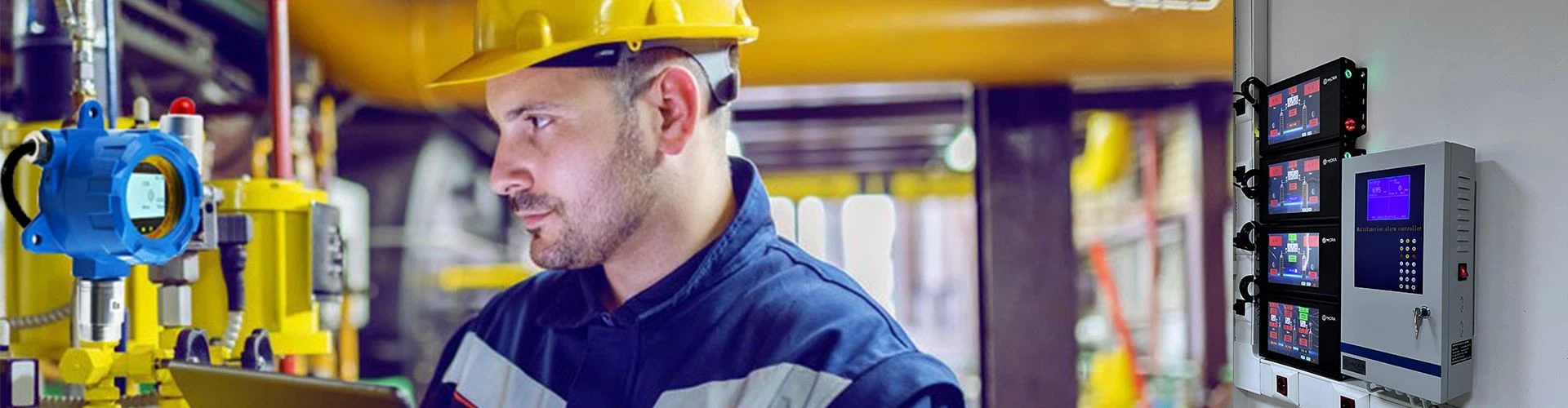


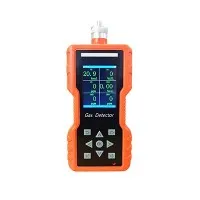


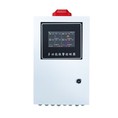

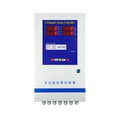
The installation of co2 gas detector needs to be considered comprehensively according to various factors such as installation height, installation scenario, leakage point and on-site installation environment:
1.Installation height
General scenario: The detector should be installed 30~60 cm from the ground, and the sensor should be fixed downward to ensure that the air inlet is not blocked. If used for breathing zone monitoring (such as offices and classrooms), it is recommended to install it at a height of 1.2~1.5 meters to reflect the actual exposure concentration of personnel.
Special scenario: In areas with high risk of compressed carbon dioxide storage or leakage (such as chemical plants), the detector needs to be installed about 40 cm from the ground to quickly capture the gas accumulated at low altitudes.
2.Location selection
Avoid airflow interference: It is forbidden to install it near exhaust vents, ventilation fans, air conditioning outlets or doors and windows to prevent air flow from distorting the detection data.
Stay away from pollution sources: Avoid areas with high concentrations of smoke, jet pesticides, flammable solvents (such as paint) and other areas to prevent false alarms.
Electromagnetic interference: Keep a distance from strong electromagnetic equipment (such as motors and transformers) to avoid signal interference.

3.Leak point layout
Micro-leakage scenario: Install close to the leak point; Jet-like leak needs to keep a safe distance to prevent high-concentration gas from impacting the sensor.
Large area (such as factory buildings, warehouses): Arrange multiple detectors according to the detection radius (5 meters for combustible gas/2 meters for toxic gas) to ensure full coverage.
4.Environmental requirements
Temperature and humidity: The operating temperature range is usually -20℃~50℃, and the relative humidity must be lower than 90% to avoid condensation of water vapor to corrode the sensor or block the gas path.
Physical protection: When wall-mounted or hoisted, it is necessary to use an explosion-proof bracket to fix it to avoid vibration or falling.
5.Other precautions
Alarm linkage: After the alarm signal is triggered, the power supply must be automatically cut off or the exhaust must be started, and manual reset is required to confirm safety.
Regular maintenance: After installation, the sensor needs to be calibrated according to the instructions, and then calibrated every 3 to 6 months, and the surface dust should be cleaned regularly.
The above requirements need to be implemented in conjunction with specific explosion-proof standards (such as the "Design Specifications for Electrical Installations in Explosive Environments").