


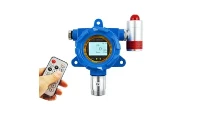

The oxygen gas sensor detector is an instrument used to measure the oxygen content in the environment. The oxygen gas detector working principle is that concentration of oxygen is determined by measuring the current when an electrochemical reaction occurs between oxygen and an electrolyte on a specific electrode, generating a current proportional to the oxygen concentration. The most commonly used alarm points for portable oxygen detectors are oxygen deficiency alarm at 19.5%VOL and oxygen enrichment alarm at 23.5%VOL. When the oxygen concentration is lower than 19.5%VOL, it indicates an oxygen-deficient environment, which may cause dizziness, breathing difficulties, and in severe cases, lead to asphyxia. When the oxygen concentration exceeds 23.5%VOL, it indicates an oxygen-rich environment, which will significantly increase the risk of fire and explosion.
This principle sensor has the advantages of high precision, good stability and fast response speed, and is suitable for oxygen detection in various environments. When the detected oxygen concentration exceeds the preset safety range, an audible and visual alarm signal will be issued to remind the user to take corresponding measures. The alarm methods can be sound alarm, light flashing alarm or vibration alarm, etc. Some high-end model oxygen detector can also remotely send alarm information through text messages, networks and other means. Portable oxygen detectors are mainly divided into disposable battery models and rechargeable lithium battery models.
1.Disposable battery models (such as dry batteries or alkaline batteries)
When the battery runs out, simply replace it and it can be used again immediately without waiting for charging. Suitable for remote, power-free or unchargeable fieldwork environments; Removing the battery when it is idle for a long time can avoid the risk of leakage.
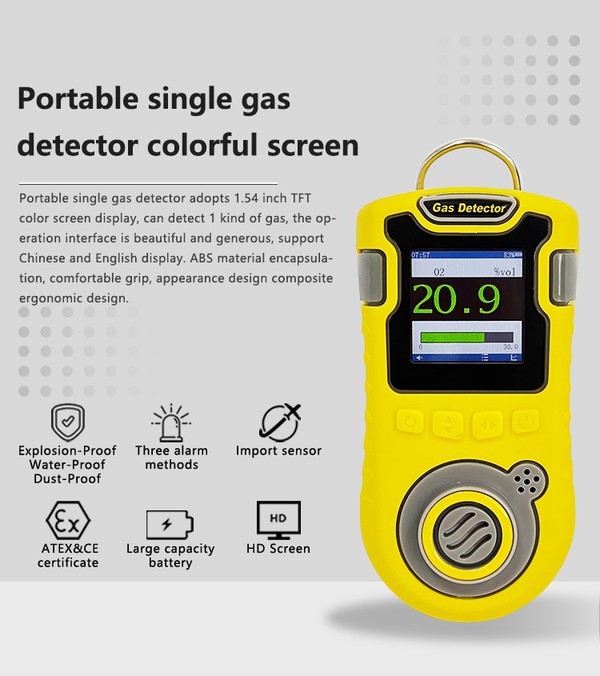
2.Rechargeable version with built-in lithium battery
It can be recharged and used repeatedly. The battery level display is intuitive (such as percentage), and there is a warning when the battery is low. The body can be designed to be more compact and sealed, with better waterproof and dustproof performance. When the battery runs out, it must be shut down for charging (usually taking 2 to 4 hours), and cannot be used immediately after replacement. Batteries deteriorate over time (with capacity dropping after approximately 300 to 500 charge and discharge cycles), and need to be returned to the factory for replacement. The performance of lithium batteries declines significantly at extreme low temperatures.
In industries such as chemical engineering, petroleum, natural gas, and coal, it is used to detect the oxygen concentration during the production process to prevent safety accidents such as explosions and fires caused by excessively high or low oxygen concentration. It can also be used to optimize production processes and improve production efficiency. For instance, in petrochemical plants, the oxygen concentration inside equipment such as reaction vessels and storage tanks is detected to ensure the safe operation of the equipment. In underground coal mines, the oxygen content in the tunnels is detected to ensure the safety of miners' lives.