

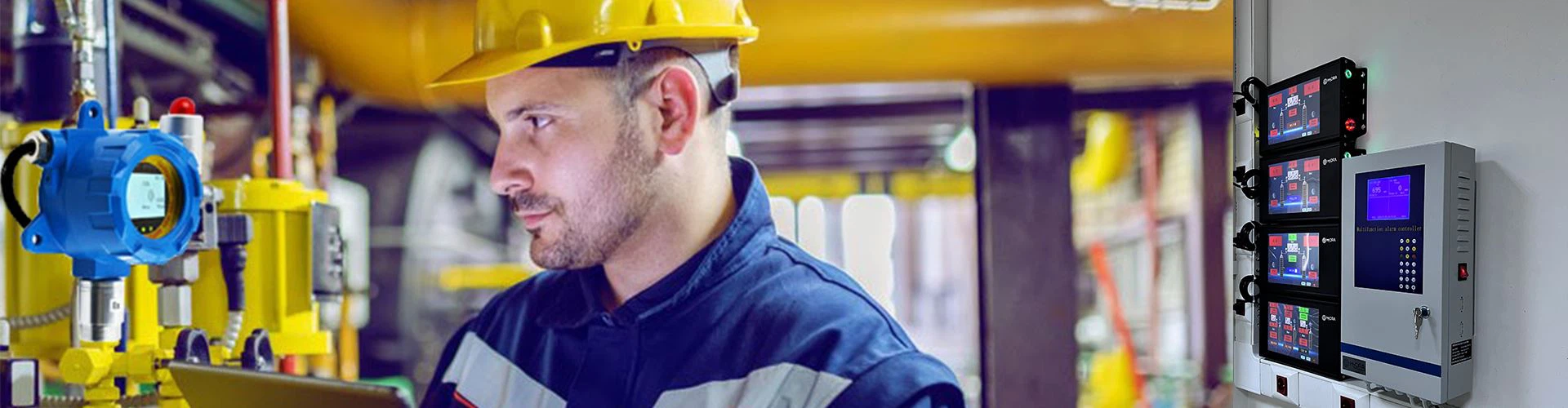





With the continuous advancement of industrialization, petrochemical enterprises have developed vigorously, which has promoted China's industrial system to become more complete, the industrial chain more complete, the overall strength and quality efficiency of the industry have continued to improve, and industrial innovation, competitiveness, and risk resistance capabilities have significantly improved. New The pace of industrialization has accelerated significantly. Tunnels and underground engineering are increasingly used in transportation logistics, municipal facilities, water conservancy and hydropower, resource storage, mineral development and other fields.
Toxic and harmful gases refer to gases that are toxic and harmful to the body, such as carbon monoxide, methane, etc.Common toxic and harmful gases have different toxic properties and can be divided into:
1. Irritating gas. Irritant gases refer to gases that are irritating to the eyes and respiratory mucosa. They are toxic gases commonly encountered in the chemical industry. There are many types of irritating gases, the most common ones are chlorine, ammonia, sulfur dioxide, nitrogen oxides, hydrogen fluoride, etc.
2. Asphyxiating gas. Asphyxiating gases refer to toxic gases that can cause hypoxia in the body and can be divided into simple asphyxiating gases, blood asphyxiating gases and cell asphyxiating gases. Such as methane, nitrogen, ethane, carbon monoxide, ethylene, hydrogen cyanide, hydrogen sulfide, etc.
Irritating gases exist in many tunnel construction and production processes, such as in mineral development and other industries. Most of these gases are corrosive and can cause acute poisoning if they enter the human body through the respiratory tract. The common characteristic of the toxic effects of irritating gases on the body is that they are irritating to the eyes, respiratory mucosa and skin to varying degrees. Generally, local damage is the main cause, but it can also cause systemic reactions.
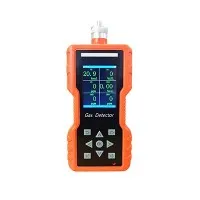
Toxic and harmful electrochemical gas sensors, combined with the development of algorithms, can distinguish and monitor the concentration of gases in the environment, thereby detecting toxic and harmful gases, timely monitoring and early warning of the gas environment in the tunnel, which can eliminate tunnel construction safety hazards and provide tunnel construction with Security provides assurance.

For the detection of toxic and harmful gases in the environment of tunnel construction, Huafan Technology recommends the following toxic and harmful gas sensors for the detection of toxic and harmful gases.
1.carbon monoxide sensor
The carbon monoxide sensor sensor type is a sensor based on the electrochemical principle. The electrochemical sensor has the advantages of high sensitivity, good selectivity, filter membrane, anti-smoke gas, and good low-concentration output linearity. It is mainly used in petrochemical industry, environmental protection, coal mines, automobiles, etc. field.
2.Sulfur dioxide sensor
The sulfur dioxide sensor is an electrochemical sensor with high sensitivity, good selectivity, the ability to filter dust and small water droplets, good low-concentration output linearity, and good stability. It is mainly used in sulfur dioxide gas transmitters and sulfur dioxide detection occasions, petroleum, and chemical industries. and other industrial fields.
3.nitrogen dioxide sensor
The nitrogen dioxide sensor is an electrochemical sensor with high sensitivity, good selectivity, the ability to filter dust and small water droplets, good low-concentration output linearity, good stability, and resistance to interference from CO, CO2, and H2. It is mainly used in NO2 gas. Alarm, detecting nitrogen dioxide gas concentration in the atmosphere, used in petroleum, chemical and other industrial fields.
4.hydrogen sulfide sensor
The hydrogen sulfide sensor is an electrochemical sensor with high sensitivity, good selectivity, the ability to filter dust and small water droplets, good low-concentration output linearity, good stability, and resistance to interference from H2, NH3, and CO. It is mainly used to detect the atmosphere. Hydrogen sulfide gas concentration, fixed H2S alarm, petroleum, chemical and other industrial fields.
5.Ethylene oxide sensor
The ethylene oxide sensor is an electrochemical sensor with high sensitivity, good selectivity, the ability to filter dust and small water droplets, good low-concentration output linearity, good stability, and resistance to interference from H2, NH3, CO2, and CL2. It is mainly used In flue gas analyzers, petroleum, chemical and other industrial fields.