

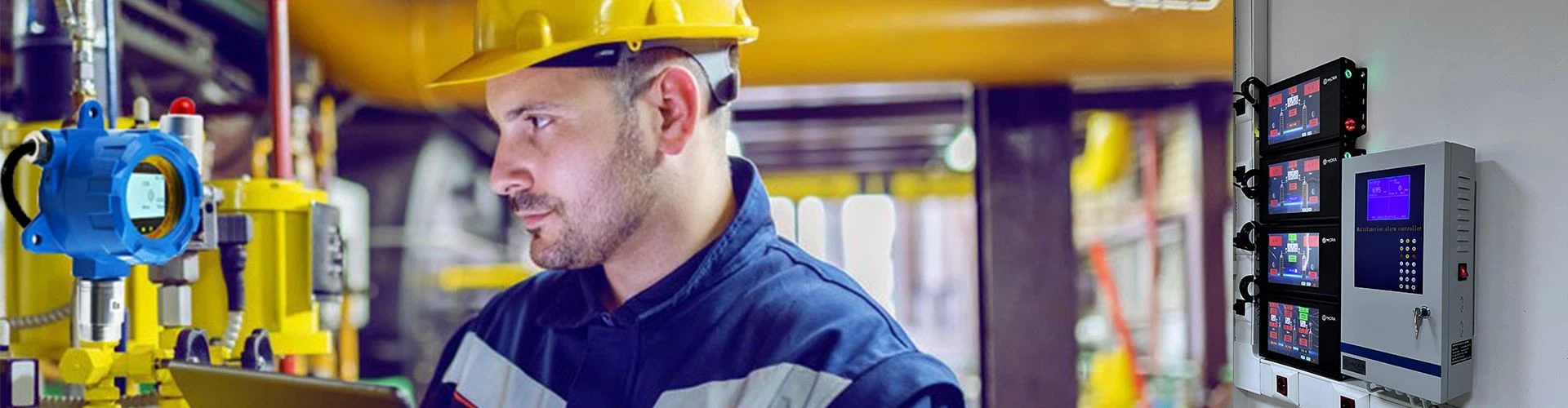







In the wastewater treatment industry, disinfection is a critical step in ensuring effluent quality meets standards. Chlorine gas (Cl₂) has long been one of the most widely used disinfectants in water treatment due to its high efficiency and cost-effectiveness. However, chlorine gas is a "double-edged sword": while it is a vital agent for disinfection, it also poses a highly toxic threat lurking within the treatment process.
The core principle behind using chlorine gas for water disinfection lies in the hydrolysis reaction that occurs when it dissolves in water:
Cl₂ + H₂O → HCl + HClO
The hypochlorous acid (HClO) produced by this reaction is a powerful oxidizing agent. As a small, electrically neutral molecule, it easily penetrates the negatively charged cell walls of bacteria, disrupting their enzyme systems and rendering them inactive. Disinfection using chlorine-based agents like sodium hypochlorite (NaClO) operates on a similar principle: they all generate bactericidal hypochlorous acid in water.
When discussing the risk of chlorine gas leaks, many people immediately think of leaks from liquid chlorine cylinders. However, in modern water treatment processes, risks may be hidden in various other stages:
1. Liquid Chlorine Storage and Dosing
In traditional processes, water treatment plants use liquid chlorine cylinders directly for disinfection. Leaks at valve connections or pipeline joints can result in the direct release of high-concentration, pure chlorine gas. This represents the most typical and high-risk leakage scenario.
2. On-site Sodium Hypochlorite Generation
To avoid the risks associated with transporting and storing liquid chlorine, an increasing number of plants are adopting on-site sodium hypochlorite generation via the electrolysis of saline solution. Yet, this process itself carries a risk of chlorine gas leakage; chlorine gas is generated as an intermediate product during electrolysis, and if equipment seals fail or the reaction goes out of control, the gas can escape into the air. Furthermore, storing sodium hypochlorite solution near acidic substances creates a significant risk, as a direct reaction between them can generate chlorine gas.
(1).On-site chlorine generation: Is the product a "solution" or a "gas"? This depends on the process route adopted by different manufacturers; there are two main types:
Direct chlorine gas production:Some systems utilize a diaphragm within the electrolytic cell to separate the chambers, allowing high-purity chlorine gas to be collected directly from the anode chamber. It is then extracted via a vacuum system for immediate use in disinfection.
On-site sodium hypochlorite solution generation (the most common method): Currently, mainstream systems typically do not extract chlorine gas directly. Instead, the chlorine gas produced at the anode reacts rapidly within the cell with the sodium hydroxide solution produced at the cathode, creating a mixed disinfecting solution.
NaCl + H₂O → NaClO + H₂↑ (under applied current)

(2).The sodium hypochlorite (NaClO) solution generated by this reaction serves as the active disinfecting agent produced on-site. The entire process requires only water, salt, and electricity; it eliminates the need for transporting or storing chlorine gas, making it safer. Although on-site generation avoids the transportation risks associated with traditional liquid chlorine, small amounts of chlorine gas may still escape during electrolysis, and the generated hydrogen gas requires ventilation management. Therefore, monitoring priorities typically include:
Chlorine (Cl₂) monitoring: Toxic gas detectors must be installed at locations where trace leaks might occur, such as electrolytic cells, pipe connections, and storage tanks.
Hydrogen (H₂) monitoring/ventilation: As hydrogen is a by-product, its concentration must be kept below safe limits. This is usually achieved through forced ventilation, though combustible gas detectors may also be used for supplementary monitoring in some scenarios.
3. Risks associated with the alternative disinfectant: Chlorine dioxide
Chlorine dioxide (ClO₂) is favored as an alternative to chlorine gas due to the formation of fewer disinfection by-products. However, ClO₂ is itself a toxic gas that must be generated on-site for immediate use. The risk of leakage cannot be overlooked, and specialized detection sensors are required for monitoring.
To address the multiple risks associated with chlorine gas in wastewater treatment plants, a reliable leak detection system typically features the following characteristics:
4. Detection principle: Electrochemical sensors
Most industrial chlorine gas detectors utilize electrochemical sensors. Their operating principle involves chlorine gas diffusing into the sensor and undergoing an electrochemical reaction at a specific electrode; this generates a micro-current proportional to the chlorine concentration, enabling precise quantitative detection. These sensors offer high sensitivity and rapid response times, making them suitable for continuous online monitoring.
Chlorine gas is highly toxic, and occupational exposure limits are extremely low. Consequently, chlorine detectors used for leak monitoring typically have a measurement range of 0–20 ppm, a resolution of 0.1 ppm, and a T90 response time of no more than 60 seconds.
Regarding alarm strategies, safety systems usually employ a two-level alarm design: a low-level alarm serves as an early warning (e.g., at 1 ppm) to trigger ventilation and inspections, while a high-level alarm initiates emergency response and personnel evacuation procedures.
5. Chlorine Gas Detection System Integration:
From detection to interlocking control: A comprehensive chlorine monitoring system comprises more than just a chlorine gas detector and an alarm. Based on industry best practices, its core functions include:
Multi-point online monitoring: Detectors are installed at critical locations-such as chlorine storage areas, chlorination rooms, and electrolytic cell zones-to ensure continuous, 24-hour monitoring.
Automated linkage control: Upon detecting a leak, the system automatically activates emergency ventilation units and shuts off valves to contain the spread of chlorine gas.
Remote monitoring and data analysis: Managers can view real-time data remotely via a central control station or mobile app, while the system also provides predictive alerts regarding potential leak risks.
From traditional liquid chlorine disinfection and on-site sodium hypochlorite generation to the use of chlorine dioxide-regardless of the process employed, the risk of chlorine gas leakage remains a constant reality. A multi-layered chlorine detection network covering storage, processing, and tank farm areas, combined with a rapid-response linkage mechanism, represents not only a mandatory requirement for environmental compliance but also a fundamental commitment to personnel safety and the company's operational continuity.