






In industries such as petroleum and chemical processing, storage tanks are essential infrastructure used to contain a wide variety of liquid and gaseous chemical substances. Over time, however, significant amounts of sediment and hazardous gases can accumulate inside these tanks. This not only threatens the integrity of the tanks themselves but also poses a serious risk to the health and safety of personnel. Consequently, conducting regular gas detection within storage tanks is of critical importance.
I. The Importance of Gas Detection in Storage Tanks
The gaseous environment inside a storage tank is complex and dynamic, potentially containing flammable or explosive volatile gases, toxic or hazardous substances, and various corrosive gases. A leak of such gases could trigger severe incidents-including fires and explosions-while also causing long-term harm to the environment and human health. Therefore, using professional gas detection equipment to regularly monitor the interior of storage tanks is a key measure for ensuring both the safe operation of the tanks and the health and safety of the personnel working on them.
II. Principles for Selecting Gas Detection Equipment
1. Precision and Accuracy
Precision and accuracy are the primary requirements for any gas detection equipment. Because gas concentrations inside a storage tank can fluctuate by very small margins, the equipment must be equipped with high-precision sensors and advanced measurement technology to accurately reflect the true concentration levels.
2. Real-time Monitoring and Response Speed
During the inspection of a storage tank, it is necessary to monitor changes in gas concentration in real time so that potential safety hazards can be identified and addressed promptly. Therefore, the equipment should offer rapid response times and real-time display capabilities, ensuring that any anomalies are detected immediately.
3. Durability and Portability
The environment inside a storage tank is often harsh, subjecting equipment to extreme conditions such as high temperatures, high pressure, and corrosive substances. As such, the equipment must be highly durable, capable of operating reliably over extended periods in such demanding environments. Furthermore, given that personnel often need to enter the tanks to perform inspections, the equipment should also be portable, making it easy to carry and operate.
4. Waterproof and Dustproof Design
The internal environment of a storage tank is typically humid and dusty. Therefore, detection equipment must feature a waterproof and dustproof design to prevent malfunctions or measurement errors caused by moisture and dust.
III. Common Gas Detection Equipment
1. Portable Gas Detectors
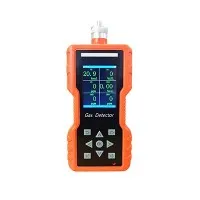
Portable gas detectors are among the devices commonly used for storage tank inspections. Compact, lightweight, and easy to operate, they are ideally suited for conducting rapid checks during routine tank inspections. For instance, a portable multi-gas detector can monitor 4–6 different gases simultaneously; should it detect a hazardous condition, it triggers audible, visual, and vibrating alarms, allowing personnel to be alerted immediately and take prompt emergency action.
2. Fixed Gas Detectors
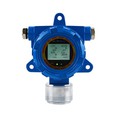
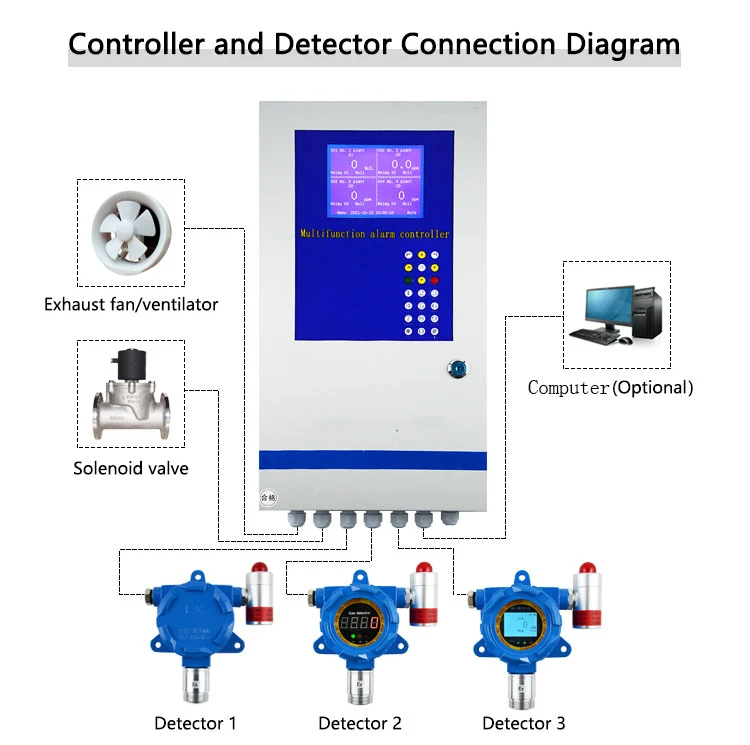
Fixed gas detectors are typically installed on the exterior of a storage tank or at critical locations to provide long-term monitoring of gas concentrations in the surrounding area. These devices offer high stability and reliability, enabling the real-time recording of gas concentration trends and alerting personnel via audible and visual alarms. While fixed detectors excel at continuous monitoring and providing early warnings for potential safety hazards, they are less flexible and portable than handheld units.
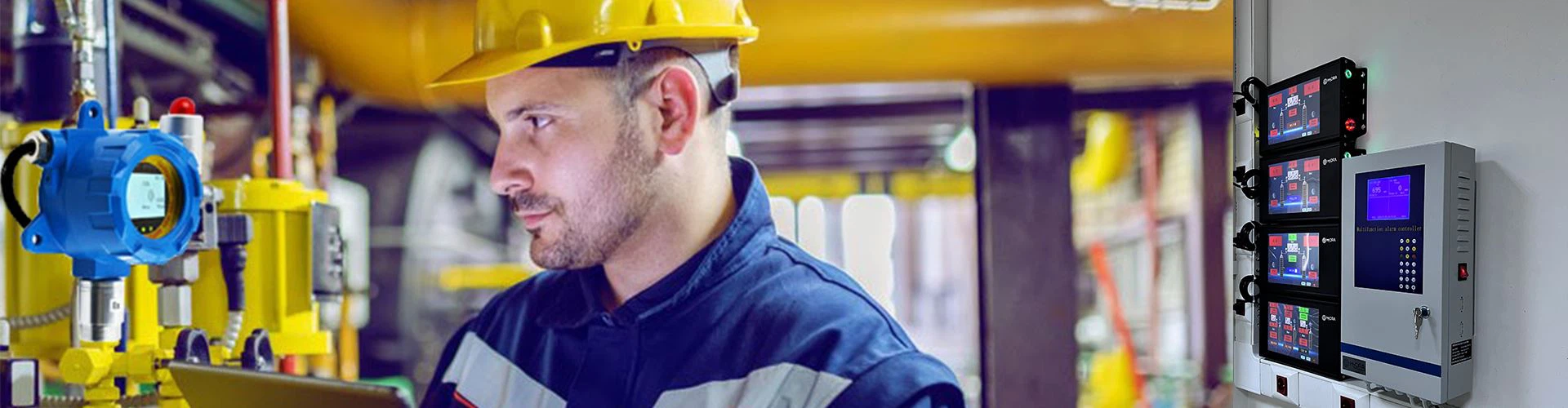
Huafan's fixed combustible ex gas detector features a rugged, cast-aluminum housing that is explosion-proof, dustproof, and waterproof. They are widely used in environments prone to combustible gas leaks, such as oil refineries and chemical plants. These units provide continuous, long-term monitoring; if gas concentrations exceed preset danger thresholds, the system triggers an alarm often activating connected audible and visual beacons-to warn personnel in the vicinity. Such instruments are essential for ensuring both personal safety and the overall operational security of the facility.