






To understand what is the application of VOC gas detector, we must first define what VOCs are. VOC stands for Volatile Organic Compoundsa category of carbon-based organic chemicals that easily volatilize into a gaseous state at room temperature.
1. Common VOCs
Common compounds include straight-chain hydrocarbons (alkanes, alkenes, alkynes), cycloalkanes, aromatic hydrocarbons (benzene series), oxygenated compounds (aldehydes, ketones, esters, alcohols), and halogenated hydrocarbons.
·A. Aromatic hydrocarbons (benzene series): benzene, toluene, xylene, ethylbenzene, styrene.
·B.Aldehydes and ketones: formaldehyde, acetaldehyde, acetone, methyl ethyl ketone (MEK), etc.
·C.Alcohols and esters: methanol, ethanol, isopropanol, butanol, ethyl acetate, butyl acetate.
·D.Alkanes and alkenes: n-hexane, pentane, hexane, cyclohexane, ethylene, propylene, butadiene, styrene, etc.
·E.Halogenated hydrocarbons: such as dichloromethane, chloroform, vinyl chloride, etc.
·F. Other common substances: phenol, dimethylaniline, propylene glycol, ethers.
2. Industry Distribution
A. Printing and packaging: VOC emissions are highly concentrated in inks and cleaning solvents. Solvent-based inks release esters, alcohols, ketones, and aromatic hydrocarbons-such as ethyl acetate, isopropanol, and ethanol-during volatilization. Cleaning processes involve benzene-based compounds, hydrocarbons, and esters.
B. Industrial Coating Industry: In furniture coating particularly for wooden furniture-solvent-based coatings primarily release esters (with ethyl acetate accounting for up to 31%), as well as m/p-xylene, toluene, and ethylbenzene. Water-based coatings, by contrast, primarily emit alcohols (approximately 47%), with ethanol alone accounting for 46%.
C. Petrochemicals and Oil Gas Storage and Transport: Processes such as oil refining, chemical production, and the loading, unloading, and storage of petroleum products often result in the emission of hydrocarbons, benzene-series compounds, and oxygenated organic compounds (from storage tank breathing losses).encountered as characteristic substances.
3. Principles of VOC Gas Detectors
The most common method for detecting VOC gases is the use of a Photoionization Detector (PID) sensor.
Operating Principle: A built-in ultraviolet (UV) lamp emits high-energy UV light (typically with an energy level such as 10.6 eV) into a gas chamber, where it irradiates the VOC molecules. When a molecule absorbs a photon with energy greater than its ionization potential, the molecule is ionized into positive ions and electrons. Electrodes collect these charged particles, generating a weak current; this current is then amplified and processed by a microprocessor to display the corresponding concentration (e.g., in ppm or ppb). After ionization, gases generally retain their original molecular structure. This technology is characterized by a fast response, high sensitivity, and a compact form factor, making it well-suited for portable use or rapid on-site screening. However, it typically provides a cumulative response value for a mixture of ionizable VOCs, making it difficult to qualitatively distinguish individual components unless only a single VOC species is present at the site.
4.Classification of PID Sensors by UV Lamp Energy (Determining Detection Capability)
This is the most critical criterion for instrument selection, as the lamp energy (measured in electron-volts, eV) directly determines which gases the instrument can "see." Commercial PIDs typically utilize lamps with one of three energy ratings:
A.9.8 eV Lamp: Possesses the lowest energy and the highest selectivity. It is primarily used to detect substances with low ionization energy, often to filter out certain interferences or to target specific aromatic hydrocarbons-such as benzene (9.24 eV), toluene (8.82 eV), ethylbenzene (8.76 eV), xylenes (8.4–8.6 eV), and styrene (8.47 eV). A primary application for the 9.8 eV lamp is the detection of benzene and its derivatives.
By detection range: Many manufacturers (such as Alphasense, Ion Science, and SUSA) categorize sensors into ppb-level (high resolution, intended for ambient air quality monitoring or trace leak detection) and ppm-level (covering a wider concentration range, used for industrial safety or high-concentration emission monitoring). For instance, a single sensor series may offer various models, such as 0–1 ppm (for indoor air quality) or 0–100/1,000/10,000 ppm (for industrial processes).
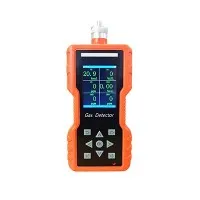
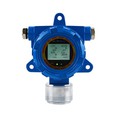
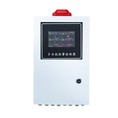
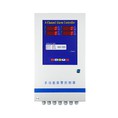
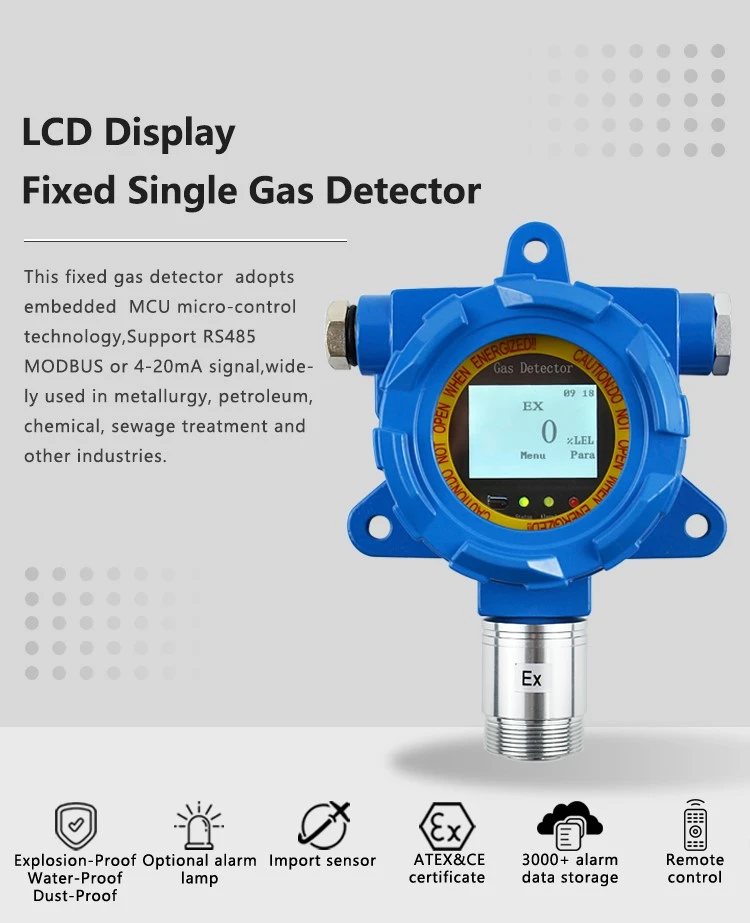
Our company's fixed VOC detectors primarily utilize 10.6 eV lamps, which customers report can achieve a service life of 2–3 years. They are equipped with plug-and-play gas sensor modules that do not require recalibration after replacement. These units are widely used in applications such as spray-painting workshops, furniture manufacturing, chemical plants, oil refineries, and exhaust gas analysis.