

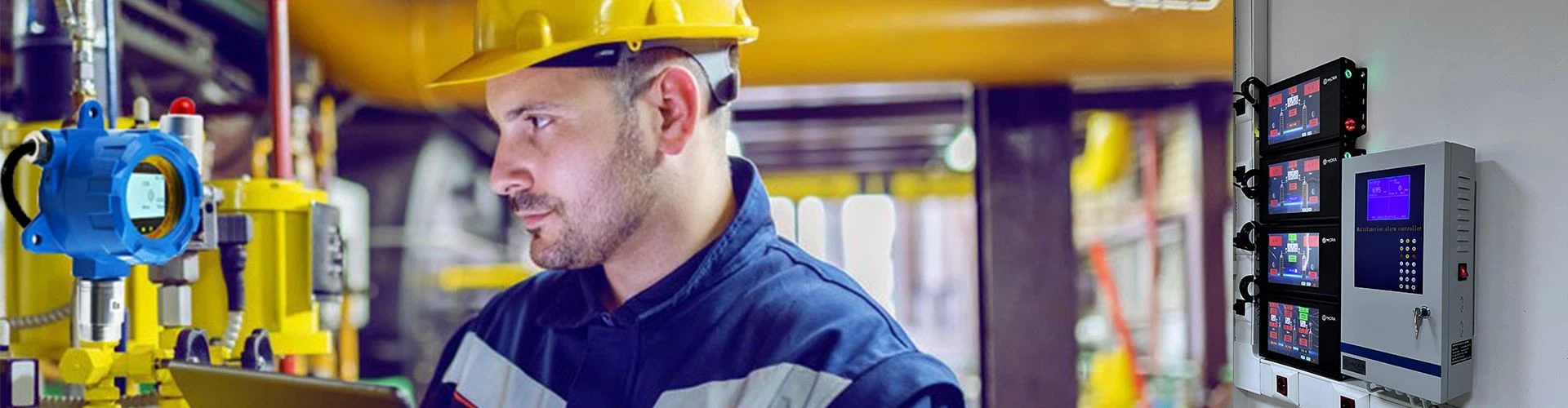


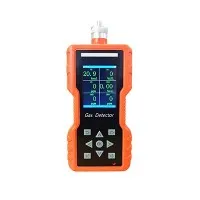


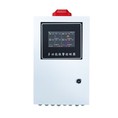

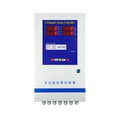
When we have doubts about the safety of the gas in the confined space, we need to use a gas detector for gas testing. For example, the welding process may cause excessive oxygen or the accumulation of explosive gases due to leakage of gas pipes or connectors, and the high-temperature process may cause the evaporation of harmful substances in the space and the generation of harmful gases. Workers entering confined Spaces must carry a gas detector for continuous monitoring to ensure that they can leave in time once the gas in the working environment reaches dangerous levels. So how does a gas detector work in a confined space?
Limited space refers to a closed or partially closed space with narrow and limited inlet and outlet, not designed as a fixed workplace, poor natural ventilation, and easy to cause toxic and harmful, flammable and explosive substances accumulation or insufficient oxygen content. Limited space operation refers to the operation activities carried out by operators entering a limited space. Usually the most conventional and the most common four gases in the limited space are: hydrogen sulfide, carbon monoxide, combustible gas, oxygen, and oxygen must be detected, because many sealed Spaces are not ventilated, there will be hypoxia phenomenon, so we must first use the detection instrument to detect whether there is hypoxia, to ensure that the operator will not coma due to hypoxia.
1.The operation method of the gas detector in a confined space is as follows:
(1). The admission of oxygen, detect the oxygen concentration level at that time.
(2). Tlammable gas admission, detection of flammable gas changes.
(3). Admission of toxic gases, testing whether the concentration of each toxic gas is lower than the allowable exposure PEL under OSHA rules. In a confined space, the general toxic gases are H2S, CO, and other toxic compounds are not among them.

Separate sampling at the top, middle, and bottom of a confined space is important to detect the concentration of various gases or vapors. Some gases are lighter than air (like methane and flammable gases) and can be collected in the upper part of the confined space, while some gases are heavier than air (like H2S) and can be found at the bottom of the confined space. There are other gases that are almost as heavy as air (like CO) that can be detected in the middle of a confined space.
2.There are three categories of finite space:
(1).The first type: airtight equipment such as cabins, storage tanks, vehicle tank, reactor, pressure vessel, pipeline, flue, boiler and so on.
(2).The second category: underground limited space such as underground pipes, basements, underground warehouses, underground engineering, waste Wells, cellars, sewage tanks, ponds, septic tanks, sewers, etc.
(3).The third category: limited space on the ground, such as storage rooms, fermentation tanks, garbage stations, cold storage, granaries, etc.