

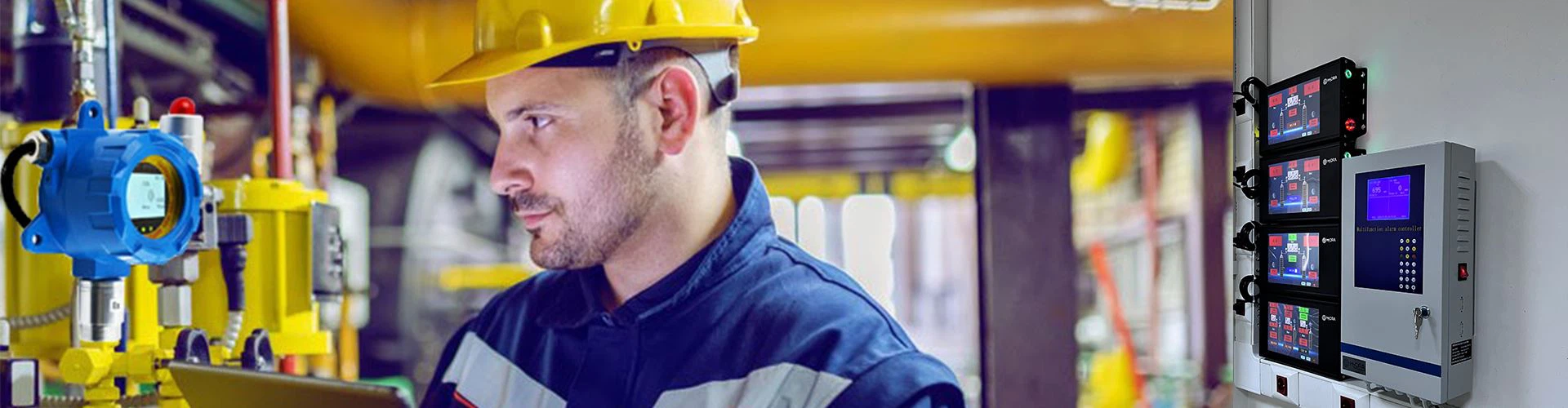









We know that according to different field environments, gas detection should choose the corresponding gas alarm and gas detector.
In closed places, such as waterways, agricultural closed granaries, railway tank cars, tunnels and other workplaces, the harmful gases contained in the air will cause immeasurable harm to the human body, so before the personnel enter the confined space, the harmful gases in the space should be detected.
1. Introduction to harmful gases in mine.
Harmful gas in mine refers to the gas harmful to human body in mine. Mainly carbon monoxide, carbon dioxide, hydrogen sulfide, sulfur dioxide, ammonia and other explosive gases (such as biogas (methane), hydrogen and methane homologues (ethane, propane, etc.)). The main component of harmful gases in coal mines is biogas. Harmful gases in mine air are extremely harmful to the life safety of underground operators. Therefore, the safety standards of common harmful gases are clearly stipulated in the "Regulations". The maximum allowable concentration of harmful gases in mine air is as follows:
The max concentration of CO is 24ppm
The max concentration of NO2 is 2.5ppm
The max concentration of SO2 is 5ppm
The max concentration of NH3 is 40ppm
The max allowable H2S is 6.6ppm
2. Toxicity of toxic gas to human body and its source.
Carbon monoxide (CO)
Main harm: The affinity between carbon monoxide and heme in human blood is 250 to 300 times greater than oxygen. (Heme is the cell that carries oxygen and emits carbon dioxide in the human blood) Once carbon monoxide enters the human body, it first combines with heme in the blood, thus reducing the opportunity for heme to combine with oxygen, so that heme loses the function of oxygen delivery, resulting in human blood "asphyxia".
Hydrogen sulfide (H2S)
Main hazards: hydrogen sulfide is highly toxic and has a strong stimulating effect; Can hinder the biological oxidation process, so that the human body is deprived of oxygen. When the concentration of hydrogen sulfide in the air is low, it is mainly caused by corrosion stimulation, and when the concentration is high, it can cause rapid coma or death.
Nitrogen dioxide (NO2)
Nitrogen dioxide is a maroon red gas with a strong irritating odor, a relative density of 1.59, and is easily soluble in water.
Main hazards: nitrogen dioxide dissolved in water produces highly corrosive nitric acid, which has a strong stimulation and corrosion effect on the eyes, respiratory mucosa and lungs, nitrogen dioxide poisoning has an incubation period, and the poisoned fingers appear yellow spots.
Sulfur dioxide (SO2)
Sulfur dioxide is colorless, has a strong sulfur odor and sour taste, and can be smelled in the air when the concentration reaches 0.0005%. Its relative density is 2.22 and it is easily soluble in water.
Main hazards: Sulfuric acid is produced after contact with water, which has a strong stimulating effect on the mucous membranes of the eyes and respiratory system, and can cause laryngitis and pulmonary edema. When the concentration reaches 0.002%, the eyes and respiratory organs feel strong stimulation; When the concentration reaches 0.05%, it is fatal in a short time.
The gas composition in a mine represents a variety of hazardous conditions. Therefore, at present, in many underground gas detection equipment, different types of gas sensors will be installed, and complex gas composition and concentration will be detected by replacing different gas detection probes to ensure mine production safety.