





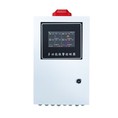

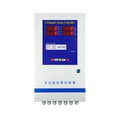
0-100% LEL and 0-n PPM in the detector
"LEL" means lower explosion limit. Combustible gas in the air to meet the minimum concentration of fire explosion, known as the lower explosion limit - referred to as% LEL. English: Lower Explosion Limited. Combustible gas in the air met the highest concentration of fire explosion, known as the upper limit of the explosion - referred to as% UEL. English: Upper Explosion Limited. So what is the lower limit of the explosion? It is not dangerous if the concentration of flammable gas is too low or too high. It will only burn or explode if it is mixed with air to form a mixture or, more specifically, with oxygen to form a certain proportion of the mixture . Combustion is a violent oxidation reaction accompanied by luminescence. It must have three elements: a, combustible (gas); b, combustion aid (oxygen); c, ignition source (temperature). Combustible gas combustion can be divided into two categories, one is the proliferation of combustion, that is, volatile or squirting from the device, the leak of combustible gas, the ignition mixture of mixed combustion. Another type of combustion, combustible gas and air mixture of fire burning, this burning reaction intense and fast, usually have a tremendous pressure and sound, also known as the explosion. There is no strict distinction between burning and explosion. Relevant authoritative departments and experts have made a combustible explosion analysis of the currently discovered combustible gas and worked out the explosive limit of combustible gas, which is divided into upper explosive limit (UEL) and lower explosive limit (English lower explode limit The abbreviation LEL). Below the lower explosive limit, the content of combustible gas in the mixture is insufficient to cause combustion or explosion, above the oxygen content of the upper limit mixture


ppm is the volume concentration: Parts per million.
ppm is a representation of the solution concentration (solute mass fraction) and ppm indicates parts per million.
For solution: 1/1000 ml of solute in 1 liter of aqueous solution, its concentration (solute mass fraction) is 1 ppm.
For gases: One of the ways to represent the concentration of pollutants in the ambient atmosphere (air).
Volume concentration representation: The volume of pollutants in a million volumes of air, ppm
Most gas detection instruments measure the gas concentration is the volume concentration (ppm). According to China's regulations, especially the environmental protection department, the gas concentration is required to be expressed in units of mass concentration (such as: mg / m3). Our country's standard specifications are also expressed in mass concentration units (such as: mg / m³;).