









Lithium-ion batteries are among the most commonly used batteries today, finding widespread application in mobile electronic devices, electric vehicles, energy storage systems, and more. However, as battery capacities increase and battery pack sizes grow, the risk of thermal runaway also rises. When thermal runaway occurs, internal chemical reactions release a range of flammable and toxic gases, primarily including hydrogen, carbon monoxide, carbon dioxide, methane, and fluorocarbons. Currently, there is no technology capable of completely preventing thermal runaway in lithium batteries; instead, the focus is on technical prevention and early detection to nip the danger in the bud.
1.Characteristics of gases released during lithium battery thermal runaway:
Hydrogen is one of the most common gaseous products of lithium battery thermal runaway. It is highly flammable; contact with a spark or flame can easily trigger an explosion. Furthermore, hydrogen is colorless and odorless, making it difficult to detect and increasing the danger it poses during thermal runaway. Consequently, strict safety measures must be implemented during the production, use, and storage of lithium batteries to prevent hydrogen accumulation and subsequent explosions.
Carbon monoxide is another common toxic gas produced during thermal runaway through the thermal decomposition or vaporization of organic solvents and other materials inside the battery. Carbon monoxide is harmful to the human respiratory system and overall health; prolonged exposure to high concentrations can lead to poisoning or even death. Therefore, in the event of thermal runaway, rapid action must be taken to reduce carbon monoxide concentrations and ensure personnel safety.

Carbon dioxide is another gas generated during lithium battery thermal runaway. Although carbon dioxide is not inherently toxic, high concentrations can pose health risks. Additionally, the large-scale emission of carbon dioxide exacerbates global climate change. Thus, efforts should be made to minimize carbon dioxide emissions when managing thermal runaway incidents.
Methane is another flammable gas produced during lithium battery thermal runaway. Like hydrogen, methane is highly flammable; contact with an ignition source can easily trigger a fire or explosion. Therefore, rapid measures must be taken during thermal runaway incidents to prevent methane accumulation and the resulting risk of fire.
Furthermore, fluorocarbons are toxic gases generated during the thermal runaway of lithium batteries. They are hazardous to human health, and excessive inhalation can lead to serious health issues. Therefore, the generation and emission of fluorocarbons should be minimized during the production and use of lithium batteries.
2.To mitigate the risk of thermal runaway in lithium-ion batteries, a series of preventive measures should be implemented, including the following:
(1). Strengthen production processes and quality testing to enhance battery safety features-such as over-voltage, over-charge, over-discharge, over-current, and short-circuit protection-ensuring the power supply is cut off promptly during abnormal conditions to prevent safety incidents like thermal runaway.
(2). Establish comprehensive protocols for the use and management of lithium batteries, standardize usage and storage practices, and strictly adhere to safety regulations to protect batteries from adverse conditions such as external short circuits, crushing, and exposure to high temperatures.
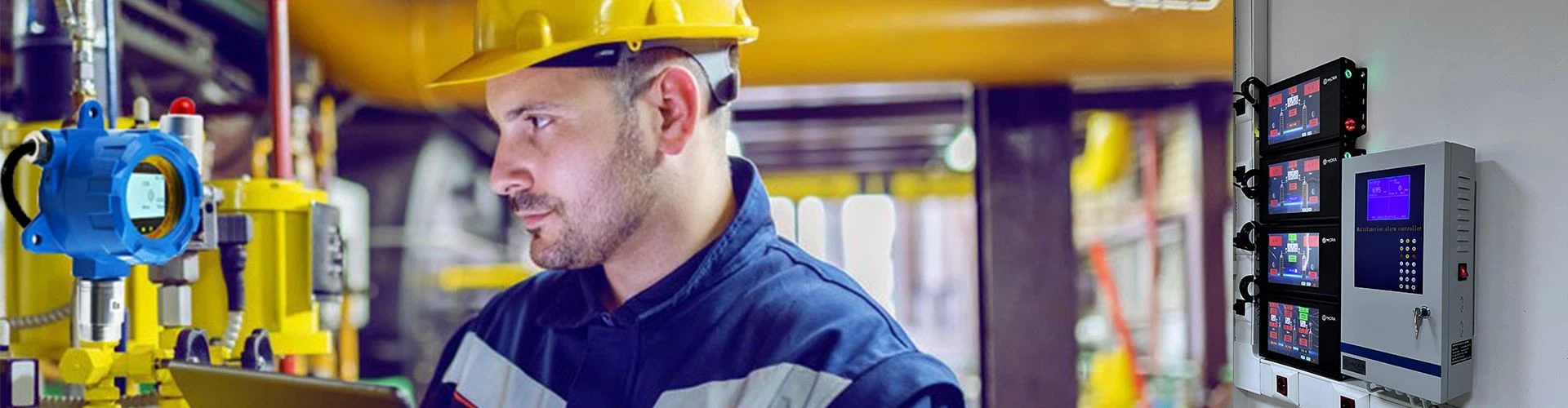
(3). Install "4-in-1" fixed multi gas detector. These devices typically integrate simultaneous monitoring capabilities for hydrogen (H₂), carbon monoxide (CO), carbon dioxide (CO₂), and methane (CH₄) to track gas leaks and concentrations in real-time. In the event of thermal runaway, if gas concentrations reach preset thresholds, the device triggers an audible and visual (red light) alarm, enabling personnel to take rapid action to ensure safety and protect the environment.