

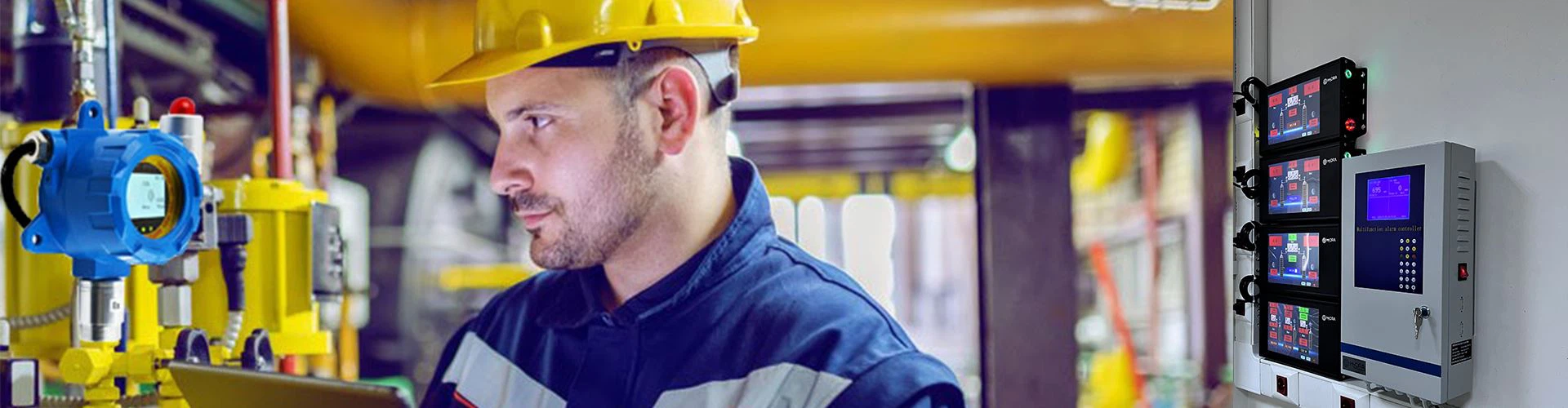


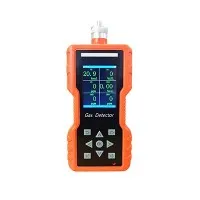


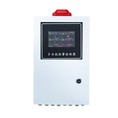

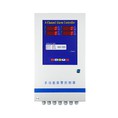
In the printing industry, controlling VOC (Volatile Organic Compound) emissions is a top priority for corporate environmental compliance. Materials such as inks and solvents used in the printing process contain significant amounts of VOCs; improper handling can not only pollute the environment and harm employee health but also lead to regulatory penalties. Selecting a reliable industrial VOC gas detector is therefore crucial for printing enterprises to achieve precise monitoring and ensure compliant emissions.
Printing enterprises face multiple challenges regarding VOC monitoring. On one hand, printing processes are complex, with different stages generating varying types and concentrations of VOCs, placing high demands on the precision and selectivity of detection instruments. On the other hand, the printing workshop environment is variable; factors such as temperature, humidity, and dust can interfere with detection results and affect data accuracy. Furthermore, as environmental regulations become increasingly stringent, enterprises must monitor VOC emissions in real-time and continuously, ensuring data integrity and reliability to meet regulatory requirements.
1.Key advantages of precise Monitoring via Fixed Industrial VOC Gas Detectors.
As the name implies, a fixed VOC detector is an instrument installed at a specific location for continuous, real-time monitoring. Unlike portable devices, these detectors feature professional or semi-professional installation, providing an uninterrupted data stream and serving as key nodes in a monitoring network for early warning and process control.

2.Working Principles of Fixed VOC Detectors
The core of these instruments lies in their sensor technology. While specific technical approaches vary, the primary objective is to convert the concentration of VOCs in the air into quantifiable electrical signals. Common working principles include:
(1).Photoionization Detection (PID): This is a widely used technology. The instrument contains a UV light source with specific energy. When an air sample is drawn into the detection chamber, UV light strikes the VOC molecules; if the photon energy exceeds the molecule's ionization energy, the molecules ionize, generating positive ions and electrons. Quantitative analysis is performed by measuring the resulting ionic current, the intensity of which is directly proportional to the target gas concentration. This technology offers high sensitivity and responds to a wide range of VOCs.
(2).Semiconductor Principle: The sensor utilizes a metal-oxide semiconductor material (such as tin dioxide) as the sensing element. When the sensor is exposed to VOC gases, the gas adsorbs onto the semiconductor surface, altering its electrical conductivity. By measuring this change in conductivity, the gas concentration can be determined. These sensors are relatively low-cost and have a long service life, though they may be susceptible to cross-interference from ambient humidity and non-target gases.
(3).Catalytic combustion principle: Primarily targets combustible VOCs. The sensing element consists of a catalyst-coated platinum wire configured in a bridge circuit. When combustible VOCs undergo flameless combustion with oxygen on the catalyst surface, heat is generated, causing a change in the platinum wire's resistance. The concentration of the combustible gas is calculated by measuring the unbalanced voltage of the Wheatstone bridge. While primarily used to monitor explosion risks, the sensor's response varies depending on the specific gas.
(4). Infrared absorption principle: Based on the selective absorption of specific infrared wavelengths by different gas molecules. The instrument emits an infrared beam through the gas being measured, and a detector measures the attenuation in light intensity caused by absorption. According to the Beer-Lambert Law, the degree of absorption correlates with gas concentration. This method offers high selectivity and stability, is resistant to sensor poisoning, and is commonly used to measure gases such as methane and carbon dioxide, as well as certain specific VOC components.
Each of these technologies has its own strengths and suitable applications; in practice, the choice should be based on factors such as monitoring objectives, accuracy requirements, environmental conditions, and cost.