

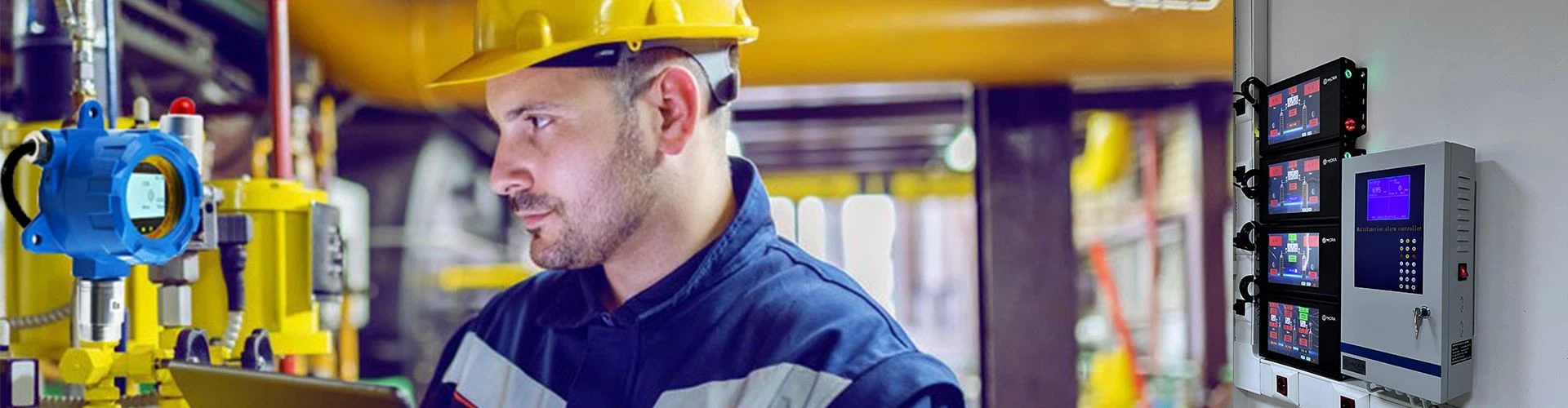


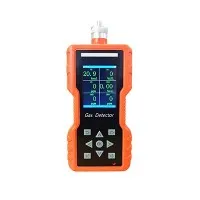


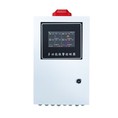

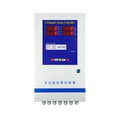
In industrial production, hydrogen is widely used as a clean energy source and a vital industrial raw material. However, hydrogen possesses extremely low ignition energy and a broad explosive range; should a leak occur and accumulate in a confined or semi-confined space, it can easily trigger fires or even explosions, posing a serious threat to personnel safety and equipment. In environments where hydrogen leaks may occur-such as hydrogen generation stations, battery rooms, and semiconductor manufacturing workshops-timely and accurate monitoring is a crucial safety measure.
Battery hydrogen leak detection primarily employs two types of detectors: electrochemical sensors and catalytic combustion sensors. The specific choice depends on the application scenario, required detection accuracy, and safety specifications.
I. Mainstream Sensor Types and Characteristics
(1). Electrochemical Sensors
This is currently the mainstream choice for fixed monitoring systems in battery rooms (particularly for lead-acid and nickel-cadmium batteries).
Working Principle: Hydrogen undergoes an electrochemical reaction (oxidation-reduction) at the surface of the working electrode, generating a micro-current; the magnitude of this current is directly proportional to the hydrogen concentration.
High Sensitivity and Selectivity: Highly selective for hydrogen, effectively avoiding interference from other gases; specifically designed for hydrogen leak detection.
Suitable for Low-Concentration Monitoring: Extremely sensitive to trace leaks (ppm level), enabling early warning. For example, mining-grade sensors can trigger alarms and linked safety actions when hydrogen concentration reaches 0.5%.
Intrinsically Safe: Suitable for use in environments with strict explosion-proof requirements.
Application Scenarios: Widely used in fixed locations requiring long-term, continuous, and precise monitoring of low hydrogen concentrations, such as battery rooms and underground charging chambers in mines.
(2). Catalytic Combustion Sensors
Commonly used to detect the flammability of hydrogen and monitor concentrations within the Lower Explosive Limit (LEL) range.
Working Principle: Hydrogen burns on the surface of a catalytic element, causing changes in the element's temperature and electrical resistance; the concentration is determined by measuring this change in resistance.
Fast Response Speed: Reacts quickly to changes in combustible gas concentration.
Good Signal Linearity: Offers excellent signal linearity within the LEL concentration range. Application Scenario: Primarily used to monitor whether hydrogen concentrations have reached levels posing an explosion risk; commonly deployed in well-ventilated areas where rapid response is critical.

2. Other Sensor Technologies and Application Scenarios
Semiconductor Sensors: Operate on the principle that the electrical resistance of metal-oxide semiconductor materials changes upon contact with hydrogen. These sensors are cost-effective and sensitive to hydrogen but are susceptible to interference from other reducing gases or environmental fluctuations. They require relatively high stability and are typically used in applications where extreme precision is not the primary requirement.
Thermal Conductivity Sensors: Based on the significant difference in thermal conductivity between hydrogen and other gases (usually air). As hydrogen concentration changes, the rate of heat dissipation from the sensor's sensing element varies, allowing the concentration to be measured. These sensors offer long service life, good stability, and resistance to sensor poisoning; however, they are generally used for measuring high hydrogen concentrations (percentage levels) and lack sufficient sensitivity for detecting low-level leaks.
Infrared Absorption Sensors: Detect hydrogen based on its specific infrared light absorption characteristics. They offer advantages such as non-consumptive operation, long lifespan, high stability, and strong interference resistance; however, traditional technology faces challenges regarding weak hydrogen absorption signals and high costs. This technology represents a promising direction for future high-end, long-term stable monitoring applications.
3. Selection Recommendations and System Integration
For fixed, continuous area monitoring in battery rooms-where the primary goal is early warning of minute leaks-electrochemical sensors should be the preferred choice. Hydrogen area monitors specifically designed for battery rooms on the market predominantly utilize this technology.
If the primary objective is explosion safety-specifically monitoring whether concentrations are approaching the Lower Explosive Limit (LEL) of 4%-catalytic combustion sensors may be selected.
System Integration: A professional hydrogen detection system comprises not only detectors but also controllers and alarm modules. It should be capable of interfacing with safety equipment such as exhaust fans and solenoid valves to form a comprehensive active defense system. Detectors can be integrated with existing control systems via analog outputs (4–20 mA) or digital buses (e.g., RS485).
For fixed locations requiring early warning and continuous monitoring of hydrogen leaks from batteries, hydrogen gas detector for battery room based on electrochemical principles are recommended. For applications prioritizing rapid response to explosion risks, catalytic combustion sensors may be considered. When selecting a model, it is necessary to comprehensively consider measurement range, sensitivity, environmental adaptability, service life, and cost.