

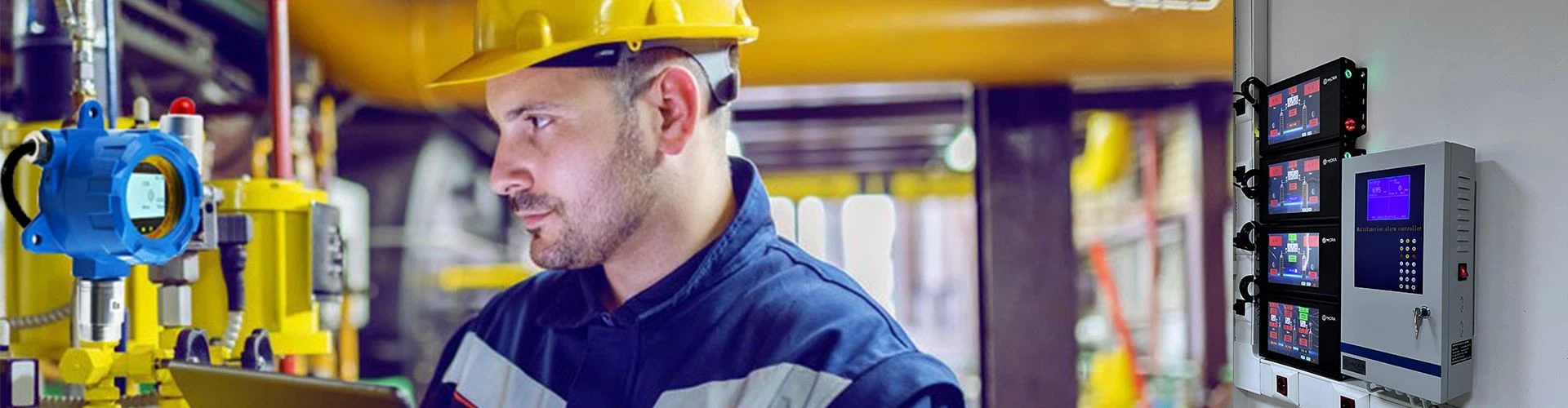


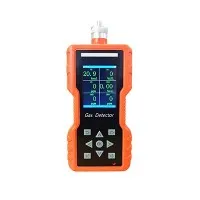


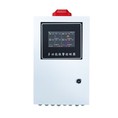

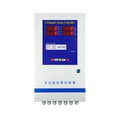
Frozen food processing plants almost invariably utilize ammonia-based refrigeration systems. Wherever ammonia is present, there is essentially a "ticking time bomb." To mitigate this risk, and in compliance with mandates from the State Administration of Work Safety, these plants procure and install liquid ammonia leak detectors to prevent emergencies such as ammonia leaks.
These fixed ammonia gas detector is primarily supplied to the refrigeration workshops of food processing plants and to chemical facilities. Because ammonia is highly irritating with even small amounts of inhalation potentially causing poisoning-proper installation of leak detectors in accordance with national regulations is crucial for the safety of lives and property. Naturally, selecting the most suitable detector is essential for ensuring an effective alarm response when a leak occurs. There is a significant price difference between detectors designed for combustible ammonia and those for toxic ammonia. The primary reason for this lies in the different internal gas sensors used. In an identical leak scenario, an electrochemical sensor (designed to prevent poisoning) will trigger an alarm sooner than a catalytic combustion sensor, as the former offers higher sensitivity.

Ammonia (NH3) has a density of 0.7710 and a relative density of 0.5971 (air = 1.00). It liquefies easily into a colorless liquid; pressurization at room temperature is sufficient to induce liquefaction (critical temperature: 132.4°C; critical pressure: 11.2 MPa, or 112.2 atm). Its boiling point is -33.5°C. It also solidifies easily into a snow-like solid, with a melting point of -77.75°C. At high temperatures, it decomposes into nitrogen and hydrogen and acts as a reducing agent; in the presence of a catalyst, it can be oxidized into nitric oxide. It is used in the production of liquid nitrogen, aqueous ammonia, nitric acid, ammonium salts, and amines. It can be produced via the direct synthesis of nitrogen and hydrogen; it causes chemical burns to the skin, eyes, and mucous membranes of the respiratory tract. Excessive inhalation can lead to pulmonary edema and even death.
When monitoring for explosion risks, a catalytic combustion sensor is used with a range of 0–100% LEL (Lower Explosive Limit). It features built-in low and high alarm thresholds: a low alarm at 25% LEL and a high alarm at 50% LEL. This setup is designed to monitor the gas's explosive limits.
When monitoring for toxicity, an electrochemical sensor is used with a range of 0–100 ppm or 0–200 ppm. It features built-in low and high alarm thresholds: a low alarm at 25 ppm and a high alarm at 50 ppm. This setup is designed to detect trace gas leaks.
The two testing methods employ different sensor types. In the event of an ammonia leak, the 0–100/200 ppm range sensor triggers an alarm first due to the higher sensitivity of electrochemical sensors. The 0–100% LEL scale divides the gas's lower explosive limit into 100 equal parts and uses specific high/low alarm thresholds to prevent on-site explosions.
Ammonia possesses two key properties: flammability and toxicity. We recommend that users requiring ammonia detection equipment for a liquid ammonia leak detector. Safety standards for such alarms typically prioritize toxicity detection, which offers significantly higher sensitivity-several times greater-than catalytic combustion sensors used for detecting flammability.