






Cold storage is an indispensable food processing and storage facility in daily life. Because of the complexity of its system and the particularity of the technology used, the safe production of cold storage has become an important supervision object.
The cold storage basically uses "ammonia" to refrigerate, "ammonia" is also known as liquid ammonia, which is both flammable and toxic gas. "Ammonia" has a wide range of uses, can make ammonium salt and urea, can also be used as refrigerated refrigerants, etc., colorless, pungent odor, liquid is strong alkaline, and the air forms an explosive mixture of gases, in case of open fire, high temperature can cause combustion and explosion.
Once ammonia "leaks, it is very harmful to human body." Because "ammonia" is highly corrosive, it corrodes and irritates the skin tissue in contact. After poisoning, the throat and mouth feel obviously stimulated, and it is easy to enter the blood through the alveoli, bind with hemoglobin, and destroy the oxygen transport function. When the concentration of ammonia in the air reaches 500-700 mg/m3, there may be a "flash" death, and too much ammonia is inhaled, resulting in too high ammonia concentration in the blood, which will cause death.
1.Causes of accidents in ammonia cold storage system in recent years
1). Due to aging of cold storage equipment;
2). The operation management is not strengthened, its technical strength is weak and the operation of workers are negligent, and the aging of parts and valves causes ammonia leakage;
3). Reliability and safety of the system, accidental accidents lead to ammonia leakage of the system.

2.Equipment reason
• Leakage at valve. Usually due to the valve axis loose, the air tightness is not good, ammonia leakage along the axis.
• Aging of welds. After long-term use, the welds on some pipes are aging, causing ammonia leakage.
• Flange washer aging. The equipment oil in the pipeline is easy to corrode the rubber gasket in the flange, causing the gasket to age and leak.
Cold storage safety hazard solution - ammonia gas alarm application
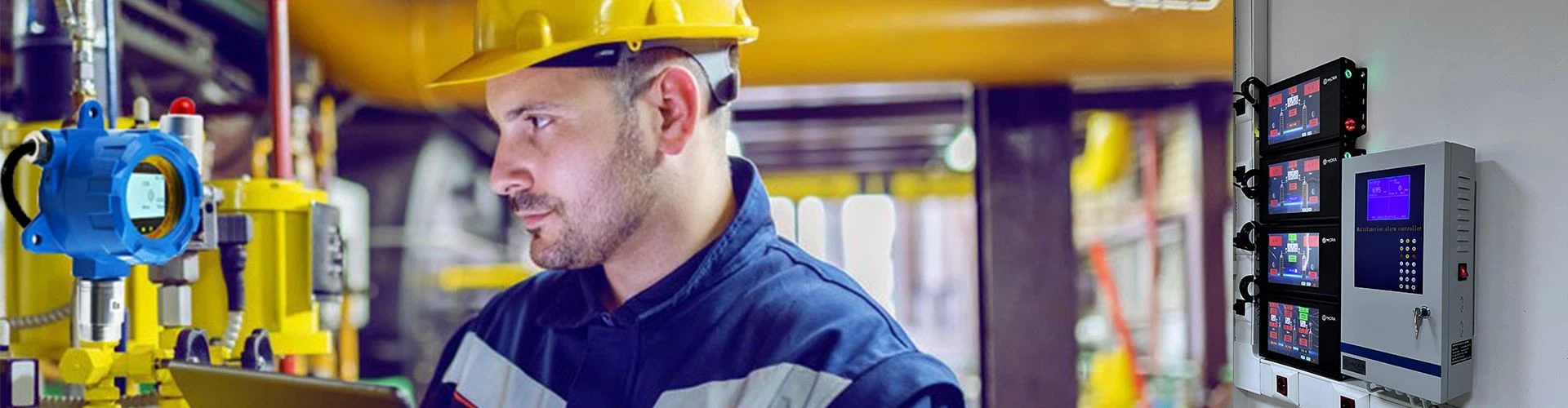
• Ammonia leak alarm is mainly located in compressor, liquid ammonia storage area, liquid ammonia gasification area.
• Liquid ammonia storage station, including discharge compressor, ammonia storage tank, liquid ammonia supply pump, liquid ammonia evaporation tank, ammonia buffer tank (pressure regulator tank), ammonia dilution tank and other equipment.
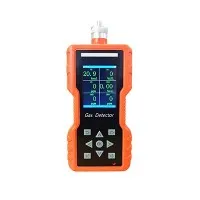
• Ammonia leakage alarm shall be installed in ammonia storage tank, liquid ammonia supply pump, liquid ammonia evaporation tank, ammonia buffer tank (pressure regulator tank), ammonia dilution tank, etc.
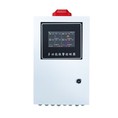
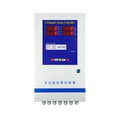
• In particular, liquid ammonia storage tanks need to be installed with ammonia leak alarms and control devices. When the ammonia detector detects a leak, the gas alarm system is produced by 4-20mA output of the controller, combined with sophisticated technology, and can monitor whether there is an ammonia leak at the scene through a remote computer. At the same time, the ammonia leak alarm can also be linked to the solenoid valve or exhaust fan, in the event of an ammonia leak, the ammonia leak concentration can be sensitively detected, and the electromagnetic valve will be urgently started to close the valve or start the exhaust fan to reduce the gas concentration and prevent the occurrence of accidents.