




In the fish meal processing industry, "freshness" is the critical factor determining product quality. A key indicator of freshness is Volatile Basic Nitrogen (VBN)-a category of alkaline nitrogenous substances, such as ammonia and amines, produced during protein decomposition. This means that ammonia is not merely an environmental pollutant in the processing plant; it serves as a direct indicator of the quality of the raw material.
1.Where does the ammonia in fish meal processing plants come from?
Ammonia in these plants originates from two main sources: the decomposition of the raw fish itself and high-temperature decomposition during processing. Fish meal is rich in protein; under the influence of enzymes and bacteria, proteins break down to produce volatile nitrogenous substances like ammonia and trimethylamine. Consequently, the lower the freshness of the fish meal, the higher the VBN value and the greater the ammonia release. National Standard GB/T 19164-2003 stipulates the following VBN limits: Special Grade ≤ 110 mg/100g; Grade I ≤ 130 mg/100g; and Grades II/III ≤ 150 mg/100g. The fresher the raw material, the lower the ammonia release during processing. During high-temperature stages such as cooking, pressing, and drying, accelerated protein decomposition leads to the further release of significant amounts of ammonia. Research indicates that the decomposition of fish meal primarily generates ammonia, amines, and sulfur-containing compounds, leading to the selection of ammonia sensors as the core component for monitoring fish meal freshness.
2.What are the hazards of ammonia to personnel and production?
Ammonia in the exhaust gases of fish meal plants can cause respiratory irritation and eye burns. In areas where ammonia tends to accumulate-such as processing zones and raw material storage-long-term exposure to low concentrations can cause chronic damage to workers' respiratory and nervous systems. How is ammonia monitored?
(1).Portable ammonia detectors:
1) Routine Safety Inspections and Rapid Troubleshooting: Personnel can carry the device to conduct walk-through inspections in production areas, raw material warehouses, and at pipeline valve connections; if an abnormal rise in readings is detected, the leak source can be quickly pinpointed. It is also used to ensure environmental safety prior to tasks such as equipment maintenance or tank inspections.

2) Confined Space Entry: Conducting an "entry test" with a portable detector before entering tanks, sewers, or basements where ammonia might accumulate is a critical step in ensuring personnel safety.
3) Emergency Response: In the event of a suspected leak, safety personnel can immediately bring the device to the scene to rapidly determine the extent and concentration of contamination, providing a basis for subsequent decision-making.
(2).Fixed ammonia gas detector
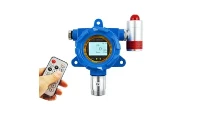
For modern fishmeal processing plants, fixed ammonia detectors offer a more reliable solution. By installing online monitoring equipment at key locations-such as production areas, raw material warehouses, drying zones, and cold storage rooms-facilities can achieve continuous 24-hour monitoring. Data is transmitted in real-time to a central control room and integrated with exhaust and alarm systems. If concentrations exceed safety limits, the system automatically activates emergency ventilation and triggers alarms to protect personnel and equipment.
The advantages of fixed ammonia detectors lie in their ability to provide continuous, stationary, and area-wide coverage. They are ideal for installation at locations with known, persistent leak risks (such as compressors and storage tank areas), enabling round-the-clock monitoring and integration with alarm and ventilation systems.
3.Detection Range:
In fishmeal production workshops, high concentrations of ammonia are generated during processes like cooking and drying. At the source of the exhaust gas (especially when raw materials are fresh), ammonia concentrations can reach 100–200 ppm or higher. OSHA sets the short-term exposure limit for ammonia at 35 ppm and the 8-hour time-weighted average permissible exposure limit at 50 ppm. For instruments with a 0–100 ppm measurement range, alarm thresholds are typically set at 25 ppm (low alarm) and 50 ppm (high alarm); this ensures immediate warning when levels are exceeded, meeting safety requirements.
Our fixed ammonia detectors provide continuous, real-time monitoring of atmospheric ammonia concentrations. They trigger immediate audible and visual alarms when levels exceed set limits and feature 4–20 mA and RS485 Modbus outputs. These ammonia gas detector can connect to controllers for real-time data transmission and exhaust fan , or transmit data to the cloud or DCS/PLC control systems.