



Hydrogen energy is recognized as a clean energy source and is becoming a low-carbon and zero-carbon energy source. However, in the production and application of hydrogen fuel cells, there may be a risk of hydrogen leakage in the battery. Hydrogen leakage will cause the performance of the fuel cell to decline, and hydrogen is a flammable gas. Excessive accumulation will cause great hidden safety hazards. Therefore, in order to detect hydrogen leakage, a hydrogen detector must be used.
Hydrogen gas detectors react quickly and accurately to hydrogen leaks. When hydrogen leaks occur, they can alarm in time. They are the most commonly used instruments for detecting gas in the industrial field today. It is mainly divided into the following three commonly used forms:
(1). Portable hydrogen detector. Portable hydrogen leak detectors can be carried with you and can continuously detect the hydrogen concentration in the working environment of the carrier. The hydrogen leak detector detects gas concentration by natural diffusion and uses imported electrochemical sensors with excellent sensitivity and excellent repeatability; the hydrogen detector uses embedded microcontroller technology, with simple menu operation, complete functions and high reliability.

(2). Pump suction hydrogen detector. The pump-suction hydrogen detector uses a built-in suction pump to quickly detect the hydrogen concentration in the working environment. The pump-suction hydrogen detector uses imported electrochemical sensors, a large-size LCD display, and sound and light alarm prompts to ensure that dangerous gases can be detected in a dark working environment and promptly prompted to the operator to prevent danger.
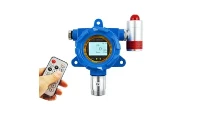
(3). Online hydrogen detectors system: The hydrogen detector consists of a gas detection control panel and a fixed hydrogen detector. The gas detection alarm controller can be placed in the duty room to monitor and control each monitoring point. The hydrogen detector is installed in a location where gas is prone to leakage. Its core component is a gas sensor.
The fixed hydrogen gas detector converts the hydrogen concentration detected by the hydrogen sensor into an electrical signal and transmits it to the gas detection alarm controller through a cable. When the gas concentration reaches or exceeds the alarm point set by the alarm controller, the gas detection alarm controller sends an alarm signal and can start external equipment such as solenoid valves and exhaust fans to automatically eliminate hidden dangers.