


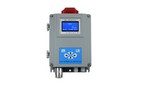
Regarding the application scope of ammonia detection alarms, they are generally used in cold storages, aquatic food factories, ammonia equipment workshops, fertilizer plants, chemical plants, tank areas... The leakage hazards of ammonia have caused serious losses to the country and people's lives and property, causing serious damage to the country and the world. With widespread concern from society, the prevention of ammonia leakage should also attract everyone's great attention and proactively take preventive measures.
Dangers of ammonia leaks
(1) Easy to vaporize and diffuse
When ammonia leaks, it changes from liquid phase to gas phase. The liquid ammonia will quickly vaporize and expand rapidly in volume. The liquid ammonia that did not vaporize in time will be atomized in the steam in the form of droplets. In the early stage of the leak, due to the Partial evaporation makes the cloud density of ammonia vapor higher than that of air. The ammonia gas drifts with the wind and easily forms large-scale poisoning areas and combustion and explosion areas.
(2) Potential poisoning and casualties
Ammonia is a poisonous, irritating and foul-smelling gas that is easy to volatilize. Ammonia leaks into the atmosphere and spreads to a certain range, easily causing acute poisoning and burns. The maximum allowable concentration per cubic meter of air is 30mg/m3. When the air The ammonia content reaches 0.5-0.6%, which can cause poisoning within 30 minutes; the main ways for ammonia to invade the human body are through the skin, trachea, respiratory tract and digestive tract.
(3) Easily flammable and explosive
Ammonia is both a toxic gas and a flammable gas. The auto-ignition point of ammonia is 651°C, the combustion value is 2.37-2.51J/m3, the critical temperature is 132.5°C, the critical pressure is 11.4Mpa, and the content of ammonia in the air reaches 11 -14%, it will burn when exposed to open flames, and its flame will be yellow-green. The presence of oil will increase the risk of burning.

(4) Easy to pollute the environment
Ammonia can pollute the air. Under the influence of wind, this toxic gas drifts with the wind, causing large-scale air pollution and causing harm to humans and animals. If a large amount of liquid ammonia leaks into rivers, lakes, reservoirs and other waters, it will cause water pollution. In severe cases, the water in the waters cannot be used without treatment.
(5) Secondary accidents are prone to occur
Ammonia is unstable and will decompose when exposed to heat. It will undergo violent chemical reactions when in contact with fluorine, chlorine, etc. If exposed to high heat, the internal pressure of the container will increase, and there is a risk of cracking and explosion.
(6) Difficulty in disposal
Ammonia is stored in a container from a gaseous state to a liquid state through pressurization or cooling. Due to the different storage methods of liquid ammonia, the different pressures in the container, the location of the leakage, the size of the crack, etc., it is necessary to adopt measures such as plugging the leakage, The technical requirements for transportation and other measures are high and the disposal is difficult.
Ammonia leak escape tips
Firefighters reminded that in the event of an ammonia leak, call the police as soon as possible. At the same time, you should quickly cover your mouth and nose with a wet towel and move away from the scene quickly (usually 50 meters away in the upwind direction, and the further away in the downwind direction, the better). If someone is found to be poisoned by ammonia gas, take them away from the scene and make them lie still and inhale oxygen. If the eyes or skin are burned by ammonia gas, rinse them thoroughly with water or 2% boric acid solution, apply antibiotic eye drops, and send them to the hospital for treatment.
In addition to mastering basic escape skills, monitoring and preventing accident-prone places, and installing flammable gas/toxic gas leak alarms can effectively reduce accidents and reduce disasters.
The national standard stipulates that in places where flammable/toxic gases exist, a gas detector should be installed within a circle with a radius of 7.5 meters to detect the leakage of flammable/toxic gases. Once a flammable/toxic gas leaks, the gas detector will Sound and light alarms are used to remind people to take emergency measures to prevent accidents.
It is recommended that relevant enterprises install point-type gas detectors in places where flammable/toxic gases are prone to leakage, and configure audible and visual alarms with high buzzer values, and install alarm controllers in monitoring rooms without harmful gases. The gas detector forms a gas monitoring system. Once gas leaks, the gas monitoring system will faithfully issue an alarm to remind people to take emergency measures to avoid risks.