



1. Why is hydrogen sulfide produced?
Hydrogen sulfide is a colorless, highly toxic gas with the smell of rotten eggs. Inhaling high concentrations of the gas will quickly cause olfactory fatigue and not notice its smell. When the concentration of hydrogen sulfide in the air reaches 0.025-0.1, you can smell it. When the concentration reaches 10-15ppm, there will be a mild poisoning incident; when the concentration reaches more than 200ppm, there is a possibility of fatality.
It is not uncommon for hydrogen sulfide to appear in food companies, because some foods need to be fermented. For example: the company is engaged in vegetable production and processing, producing Luo Han bamboo shoots, and Luo Han bamboo shoots need to be fermented, and substances such as hydrogen sulfide will be formed during the fermentation process.It can be seen from this that the production process of hydrogen sulfide is inseparable from fermentation, so in places such as septic tanks, fermentation tanks and domestic sewage pipes, microorganisms may form hydrogen sulfide in the process of fermenting organic matter. Of course, in addition to hydrogen sulfide, there are many other substances, which is why these places smell so bad.
2.How to prevent hydrogen sulfide poisoning
(1). Production equipment that produces hydrogen sulfide should be as closed as possible and equipped with automatic alarm devices (the concentration of hydrogen sulfide in dangerous places cannot be judged based on the smell. When hydrogen sulfide reaches a certain concentration, it will cause olfactory paralysis).
(2). Wastewater, waste gas, and waste residue containing hydrogen sulfide must be purified and discharged only after meeting the emission standards.
(3). When entering closed containers, pits, kilns, trenches and other workplaces where hydrogen sulfide may exist, the concentration of hydrogen sulfide in the place should be measured first, ventilation and detoxification measures should be taken, and operation can be carried out only after safety is confirmed. The concentration of hydrogen sulfide should be measured continuously during the operation.

(4). Take personal protective measures during operation, equip with anti-gas equipment (gas masks are generally used for escape and self-rescue), and tie a rescue belt or rope around the waist of the operator. Mutual protection should be done well, and more than 2 people should be present.
(5). People with hepatitis, kidney disease, and tracheitis are not allowed to engage in work involving contact with hydrogen sulfide.
(6). Strengthen the training of employees on professional safety knowledge and skills to improve self-protection awareness and ability.
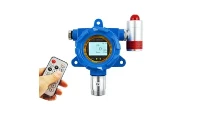
Industrial hydrogen sulfide gas alarm detector can effectively detect the concentration of hydrogen sulfide gas and prevent the concentration of toxic gas from exceeding the standard after gas leakage. The hydrogen sulfide gas detector consists of two parts: a gas alarm control panel and a H2S gas detector. The hydrogen sulfide gas control controller can be placed in the duty room. The hydrogen sulfide gas detector is installed at the location where the gas is most likely to leak. The core component of the gas detector is the built-in gas sensor. The hydrogen sulfide body sensor detects the concentration of hydrogen sulfide gas in the air. The gas detector converts the hydrogen sulfide gas concentration detected by the h2s sensor into an electrical signal and transmits it to the controller through a cable. The higher the hydrogen sulfide gas concentration, the stronger the electrical signal. When the gas concentration reaches or exceeds the alarm point set by the gas alarm controller, the gas alarm controller sends an alarm signal.