


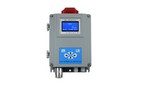
In some confined spaces, whether in sewers or cellars, oxygen levels might be too high or too low, and maybe there is contain toxic gases.It is very dangerous to enter such a confined space without adequate ventilation or using oxygen detector to test the concentration.Before we know how to enter these confined spaces safely, we need to know why there is insufficient or excessive oxygen.

The common harm to human body caused by oxygen concentration is mostly the pathological process of body abnormality caused by hypoxia. More seriously, it may lead to death due to hypoxia of heart, brain and other important organs. In fact, when the oxygen detector detects the oxygen content in a confined space, we should consider the suffocation shock and other problems that may be caused by low oxygen concentration. In some cases, high oxygen content in a confined space may cause unexpected chemical reactions or combustion.
The oxygen content in air is about 20.9%, and nitrogen is more than 78% , and others are carbon dioxide, water vapor, carbon monoxide and other trace gases.So for the zero point of an oxygen detector (the concentration of the oxygen detector shown in a normal environment), the set corrected concentration of the oxygen sensor is 20.9% or 21.0%.

In most confined space, oxygen concentrations are measured by volume concentration.In general, when the concentration detected by the oxygen sensor is less than 19.5% of the total gas volume, we can conclude that there is insufficient oxygen in the current environment.China's SY/ t6458-2000 and GBZ/ t205-2009 regulations stipulate that the excess concentration of oxygen is 22%.So when the oxygen detector reads 22% above the normal volume concentration, there is too much oxygen.No matter the result of an oxygen detector is too high or too low, it should set a reasonable alarm value to remind the personnel that the oxygen concentration of the current environment can pose a threat to human body or environmental safety and carry out correct decision on time.In addition, when the oxygen concentration is ultra-high 23.5% volume, it is necessary to ensure the intrinsic safety of the oxygen sensor and follow the maximum concentration limit of the oxygen sensor itself, rather than measuring excessive oxygen.

In real life and work, the oxygen concentration is normal when it is about 20.9%, and all other concentrations indicate that the environmental is abnormal.When oxygen level islower than normal, it indicates that other components in the air are abnormal or contaminated.At this point, even if the oxygen concentration is not close to alarm point, the reason of abnormal oxygen level must be identified before personnel enter the tested environment.