


The application fields of hydrogen sulfide gas detectors
1. In industrial safety: Hydrogen sulfide is a highly toxic and flammable gas, such as in petrochemical plants, coal mines, and other places. Hydrogen sulfide leakage may lead to explosions and poisoning accidents. The hydrogen sulfide gas detector can be used to monitor the concentration of hydrogen sulfide gas in the environment in real time, detect leaks in a timely manner, and issue an alarm to ensure the safety of workers.
2. Mine safety: There is often a risk of hydrogen sulfide gas leakage in mines, which poses a threat to the safety of miners. The hydrogen sulfide gas detector can be used for monitoring hydrogen sulfide gas in mines, timely detecting highly toxic gas leaks, and ensuring the safety of miners.
3. Organic synthetic chemistry: Hydrogen sulfide gas has a wide range of applications in organic synthetic chemistry. For example, in some organic reactions, hydrogen sulfide gas is a reducing agent. The hydrogen sulfide gas detector can help synthetic chemistry researchers monitor the concentration of hydrogen sulfide gas in the reaction system in real time, ensuring the control of reaction conditions and the guarantee of product quality.
In urban construction areas; Hydrogen sulfide is more commonly found in low-lying areas such as urban sewage pipelines, pits, septic tanks, sewage tanks, pulp tanks, and other types of fermentation tanks and vegetable pickling tanks. There is a possibility of fermentation and the generation of hydrogen sulfide in these areas. Moreover, these areas have poor ventilation compared to the outside, and it is even difficult to achieve ventilation, which creates good conditions for the continuous accumulation of hydrogen sulfide.
In addition, H2S gas is widely used in chemical analysis, metal refining, industrial agents, pesticides fluorescence, pharmaceuticals, sulfur and volatile sulfur preparation, organic synthesis of reducing agents.
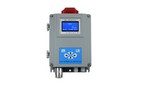
The fixed H2S gas detector is used to detect the concentration of H2S gas in the air and display it in real time. It adopts a diffusion sampling method and supports 4-20MA/RS485 MODBUS output. It is connected to the DCS/PLC central control system and emits an alarm or links with other equipment such as fans and solenoid valves when the gas concentration reaches a dangerous level.

How to install H2S gas detector
1. If the density of hydrogen sulfide gas is higher than that of air, the installation height of the hydrogen sulfide gas detector should be 0.3-0.6m on the floor (or floor).
2. In areas without impact, vibration, or strong electromagnetic interference, hydrogen sulfide gas detectors should be installed with a clearance of no less than 0.3m around
3. If the specific gravity of H2S gas is greater than that of air, the gas detector should be installed at a distance of (30-60) cm from the ground, and the sensor position should be facing downwards.
Please do not install in the following locations
1. Places directly affected by steam and oil fumes;
2. Places with high airflow such as air supply outlets, ventilation fans, and doors;
3. Places with high levels of water vapor and droplets (relative humidity ≥ 95% RH);
4. Places with temperatures below -20 ℃ or above 50 ℃;
5. Places with strong electromagnetic fields.