



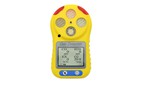
Fixed gas detectors are used in various industrial sites such as chemical industrial parks, gas stations, boiler rooms, sewage treatment plants, cold storage facilities, and underground pipe galleries. They play a crucial role in continuously monitoring the leakage of flammable, toxic, and oxygen-deficient gases 24 hours a day. They serve as the first line of defense against explosion, poisoning, and asphyxiation accidents and are also key verification items in safety supervision and inspection. Although many enterprises have installed the equipment, due to their lack of understanding of the installation norms and standards of fixed gas detectors, problems such as incorrect height, excessive spacing, non-explosion-proof wiring, and unreasonable positioning occur. This leads to the equipment being missed, false, and ineffective, and even being identified as a major safety hazard, facing suspension for rectification and penalties.
1. Industrial production installation area
In industrial environments, especially in areas where toxic, harmful or flammable gases are emitted, the installation height of gas detectors needs to take into account the specific gravity of the gas, its diffusion characteristics and the range of personnel activities comprehensively. For gases with a specific gravity greater than that of air (such as certain sulfides and chlorides), it is recommended to install the detector near or below the ground (for example, 0.3 meters to 1 meter above the ground), as these gases tend to accumulate in low-lying areas. On the contrary, for gases with a specific gravity less than that of air (such as methane and hydrogen), they should be installed at a higher position, usually 1.5 to 2 meters above the ground, to avoid interference from near the ground and effectively capture the rising gas.
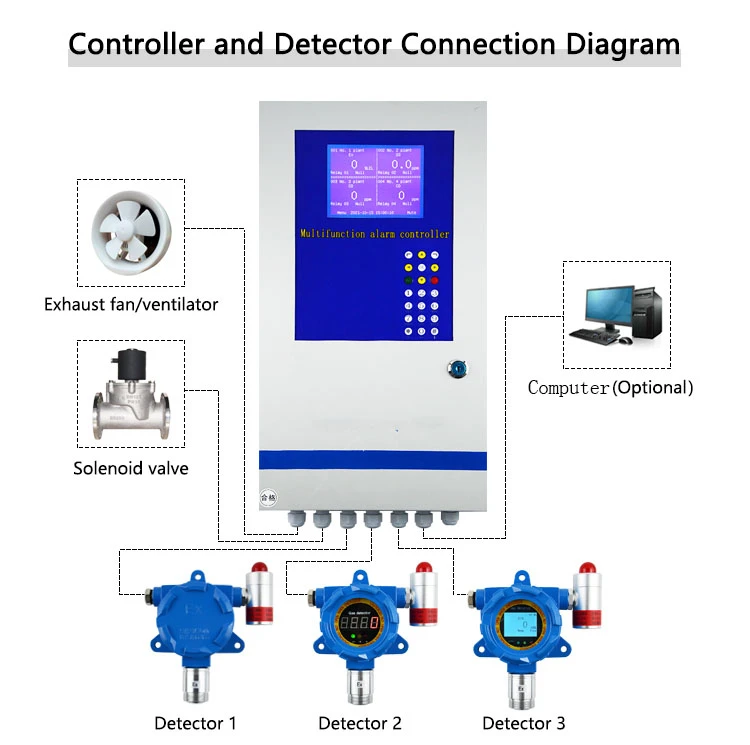
2. Warehousing and logistics facilities
In warehouses and logistics centers, as the stacking of goods may impede the diffusion of gases, the installation of detectors needs to take into account both the layout of goods and ventilation conditions. Generally speaking, positions directly above the goods stack should be avoided to prevent gases from being absorbed or blocked by the goods. For most gases, it is recommended to install them in the central area for personnel passage or monitoring, with a height of approximately 1.2 to 1.8 meters. This not only facilitates maintenance but also effectively covers the monitoring area.

3. Underground space and tunnels
In enclosed or semi-enclosed Spaces such as underground parking lots and tunnels, due to poor air circulation, harmful gases tend to accumulate. In such environments, the installation of gas detectors should be evenly distributed along both sides or the top of the channel, and the appropriate installation height should be selected considering the specific gravity of the gas. For common gases, the installation height is usually between 1.5 meters and 2.5 meters to ensure that gas changes can be captured while avoiding direct impacts from vehicle passage.
4. Laboratories and research facilities
In a laboratory environment, the installation of gas detectors needs to be more precise to meet specific safety standards and experimental requirements. Generally, depending on the height of the laboratory bench and the location of the gas emission point, the detector should be installed in a position that is convenient for observation and will not interfere with the experimental operation. The height is usually between 1.2 meters and 1.5 meters. For special gases or experimental conditions, the installation height may need to be adjusted according to the specific experimental guidelines.