


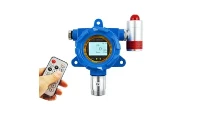

As we all know, because hydrogen has colorless, tasteless, flammable and explosive characteristics, once it leaks and accumulates to a certain concentration, it is easy to cause fire and even explosion accidents. The hydrogen detector can detect and alarm the potential hydrogen leakage risk in time. When the hydrogen concentration exceeds the preset safety threshold, the hydrogen detector will immediately send out an audible and visual alarm signal to remind the user to pay attention, in order to effectively avoid the occurrence of accidents. Do you know if a hydrogen detector can measure very low or very high concentrations of hydrogen?
Some high-precision hydrogen detectors, such as sensors using electrochemical principles, can detect hydrogen as low as a few parts per million (parts per million volume concentration) or even lower concentrations. This type of sensor generates an electric current through the reaction of hydrogen gas with chemicals in the electrolyte solution, and the size of the current is proportional to the concentration of hydrogen gas, thus achieving the measurement of very low concentrations of hydrogen gas. However, it should be noted that the measurement of very low concentrations of hydrogen often requires high accuracy and stability of the instrument, so when selecting a hydrogen detector, it is necessary to ensure that it can meet the specific measurement needs.
The detection of very low concentration of hydrogen has important application value in environmental monitoring, medical applications and some high-end laboratories. For example, in environmental monitoring, hydrogen detector can detect the level of hydrogen in the atmosphere and assess environmental pollution; In medical applications, hydrogen detectors can be used to monitor leaks of hydrogen in medical equipment or laboratories to ensure personnel safety.

For the detection of extremely high concentrations of hydrogen, although most conventional hydrogen detectors may not be able to directly measure concentrations close to 100%VOL(volume percentage), some specially designed detectors or sensors can achieve accurate measurement of high concentrations of hydrogen through special algorithms and calibration processes. These hydrogen detectors usually use infrared absorption, thermal conductivity or mass spectrometry detection principles, using the absorption characteristics of hydrogen molecules to specific wavelengths of infrared light or thermal conductivity changes to determine the concentration. Therefore, when choosing a detector that can measure extremely high concentrations of hydrogen, special attention needs to be paid to its measurement range and sensor type.
Extremely high concentration hydrogen detection is mainly used in large-scale hydrogen storage facilities, fuel cell production lines and other scenarios. In these scenarios, a hydrogen detector is required to monitor the hydrogen concentration in real time to ensure the safe operation of the device and prevent safety accidents caused by hydrogen leakage.
In summary, the fixed hydrogen gas detector can measure very low or very high concentrations of hydrogen, but the specific measurement range will be affected by a variety of factors. Therefore, in practical applications, we should choose the right hydrogen detector according to the specific needs and scenarios, and regularly calibrate and maintain.