


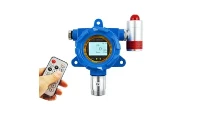

1.How to analyzer of toxic and harmful gases in tunnel construction
The poisonous and harmful gases in the tunnel are always the main hazard in the construction, if the construction is not proper, it is easy to cause serious safety accidents. So what are the harmful gases in the tunnels? They are mainly methane, carbon monoxide, carbon dioxide, hydrogen sulfide, nitrogen and varying amounts of heavy hydrocarbons and trace rare gases.
According to the chemical properties, these toxic and harmful gases are divided into two categories: combustible gas and toxic gas.The main components of the flammable gas in the tunnel are methane (CH4, gas) and some volatile organic compounds (we collectively call it VOC), which are easy to burn and even cause explosions when they encounter fire sources, thereby causing harm to life and property.
The toxic gases in the tunnel are divided into three categories of irritating gases (chlorine, phosgene, biphosgene, sulfur dioxide, nitrogen oxides, formaldehyde, ammonia, ozone), asphyxiating gases (carbon monoxide, hydrogen sulfide, hydrogen cyanide, carbon dioxide) and acute toxic organic gases (VOC) according to their different mechanisms of action on the human body. It is worth mentioning that most organic gases (VOCs) are both toxic and flammable, such as n-hexane and dichloromethane. Tests for these organic compounds have previously mostly detected their explosiveness, but usually at values that do not reach the lower explosive limit (LEL) concentration of the gas. Its toxicity has already caused harm to the human body, so for the detection of organic compounds (VOC), we must first test the poison and then test the explosion.

2.How to choose toxic and harmful gas detector
First, we need to determine the type and concentration range of the gas to be detected. Combustible gas with methane as the main component is easily present in the tunnel, so it is necessary to equip a detector with a combustible gas sensor; Secondly, there may also be carbon monoxide (CO), hydrogen sulfide (H2S) and other toxic gases in the tunnel, so it is also equipped with a detector of carbon monoxide (CO) and hydrogen sulfide (H2S) sensor. Considering that there may also be organic toxic and harmful gases (VOC) in the tunnel, which may cause low concentrations of human poisoning, such as aromatic hydrocarbons, halogenated hydrocarbons, ammonia (amine), ethers, alcohols, esters, etc., it is also recommended to choose photoionization (PID) sensors.
3.About calibration.
Due to the gas detector sensor in normal use, its sensitivity naturally decreases by 10% to 30% per year, if the gas detector sensor sensitivity decreases, the leakage of gas concentration reaches the lower explosive limit and fails to alarm in time, there will be a risk of explosion. Therefore, the gas detector needs to be verified every year to ensure the accuracy and reliability of its performance and quantity value.