


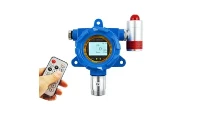

Fixed gas detectors, which monitor the concentration of toxic or hazardous gas leaks in the air, require calibration every six months or once a year. While calibration methods vary by product, the fundamental principle remains the same: calibrating the detector so that its readings align with the concentration of the standard calibration gas. The calibration procedure for the digital gas detectors manufactured by our company is as follows.
Step 1: Zero set:F-2E ( as video zero set), Operate in normal open air
1)Turn on the detector for a while untill data get stable and then operate in normal open air.
F-2E: press menu and then input 1234 password,press ok, then press up or down turn to F-2E,press ok.then it display AD value(ignore it). then ok, it will display 0.
Step 2:Gas calibration:F-P1 (enter 1234 password and get into) P1 is for one point calibration when you only have one kind concentration of standard gas.
Firstly Input the standard gas, wait a while untill the value to stabilize, enter the menu to F-P1,then press OK to display the AD value, and then press ok it will display "good"if the calibration is successful, and "FAIL" if the calibration fail.
For oxygen detectors, calibration typically requires introducing pure nitrogen to set the zero point and then calibrating against air (20.9% O₂), or using a certified oxygen calibration gas cylinder of known concentration.
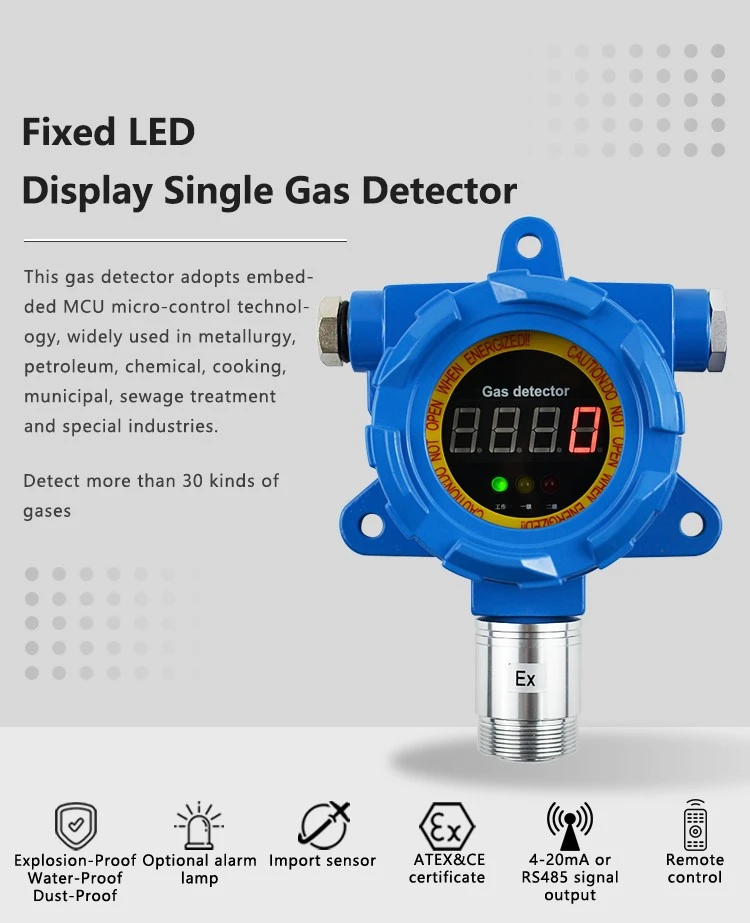
Commonly used calibration equipment includes cylinders of calibration gas with known concentrations, flow meters, pressure valves, and calibration hoods.
Precautions for calibration: Calibration environment. Gas detectors are electronic instruments, and errors during verification often stem from the environmental conditions. Good ventilation is required to prevent interference with the target gas concentration, and the environment and temperature must meet specific standards.
Calibration flow control. The flow rate directly affects the accuracy of the verification results; therefore, it must be strictly controlled. Both excessively high and excessively low flow rates can impact the outcome; a flow rate of 400–500 mL/min is typically used.
Discrepancies between the main controller and the field detector readings during calibration. When the gas concentration detected by the sensor reaches or exceeds the preset alarm threshold, the main controller triggers an alarm to alert personnel to take safety measures, thereby ensuring safe operations at the facility.
Use of calibration hoods. Calibration hoods are used when calibrating combustible or toxic gas detectors. Since manufacturers often provide their own proprietary hoods, using the original manufacturer's hood is recommended to ensure more accurate calibration results. Additionally, to maintain detection accuracy, gas detectors should be calibrated at least once a year.