



In a welding workshop, the welding process generates various harmful gases and fumes, making the selection of a suitable gas detector crucial. The following is a detailed analysis of how to choose a gas detector based on the sources and characteristics of welding workshop exhaust gases.
1. Define the Detection Target
Welding workshop exhaust gases mainly include carbon monoxide (CO), carbon dioxide (CO2), sulfur dioxide (SO2), particulate matter (PM), benzene compounds, nitrogen oxides, and ozone. When selecting a gas detector, the detection target must be determined based on the types of harmful gases that may be present in the workshop. For example, if the workshop mainly performs carbon dioxide shielded welding, the focus should be on detecting CO, CO2, NO2, and benzene compounds.
2. Understand the Detection Standards
To ensure that the concentration of harmful gases in the workshop complies with national occupational health standards, it is necessary to understand and master the occupational exposure limits for relevant harmful gases. For example, GBZ2.1-2019 specifies the PC-TWA (Time Weighted Average Permissible Concentration) and PC-STEL (Short-Term Exposure Permissible Concentration) for CO, CO2, NO2, and benzene. These standards will serve as important criteria for selecting the range, accuracy, and alarm threshold of gas detectors.

3. Selecting the Type of Detector
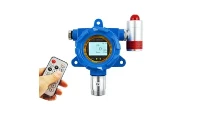
Multi 5 Gas Detector: For environments like welding workshops where multiple harmful gases may be present, multi-function gas detectors are more suitable. For example, our HFP-0401, HFP-0401(C), and HFT-0401 models are industrial-grade explosion-proof online multi-function gas detectors that can monitor the concentration of multiple gases in real time, featuring display and audible/visual alarm functions, and supporting data transmission for easy remote monitoring and management.
Dust Concentration Detector: For welding fumes, a dedicated dust concentration detector should be selected. These detectors can monitor the concentration of welding fumes in real time, and also have display, audible/visual alarm, and data output functions to ensure that the dust concentration in the workshop is controlled within a safe range.
4. Considering Detector Performance
Accuracy and Stability: Choose a gas detector with high accuracy and stability to ensure the accuracy of the monitoring data. Detectors using imported sensors typically offer higher accuracy and stability.
Alarm Function: The detector should have high and low concentration alarm functions. When the concentration of harmful gases or fumes exceeds the standard, it should automatically issue an audible and visual alarm to remind operators to take timely measures.
Protection Level: The welding workshop environment is harsh, requiring a detector with a high protection level. For example, a detector equipped with an industrial-grade aluminum alloy protective shell can withstand high temperatures, humidity, and other harsh environments, ensuring long-term stable operation.
Data Output and Remote Monitoring: Choose a detector that supports 4-20 mA and RS485 signal output for easy connection to PLCs or other monitoring systems, enabling remote data transmission and monitoring. Detectors supporting wireless data transmission can further improve monitoring efficiency.
5. After-Sales Service and Maintenance: Choose a brand with a good after-sales service system to ensure timely and professional technical support and maintenance services during use. Also, understand the maintenance cycle and cost of the detector to ensure long-term economic efficiency.