



Spray painting booths use a wide variety of paints and solvents, resulting in complex volatile organic compounds (VOCs). The most hazardous gases must be considered first. VOCs are a primary concern, but different gases require different sensors. For example, benzene and xylene are highly toxic. Solvent vapors evaporating in spray painting booths can explode upon contact with open flames or electrical sparks, making LEL (Liquid Oxide Filter) detection essential. Spray painting booths are mostly relatively enclosed spaces containing various hydrocarbons, such as methane, ethane, propane, butane, and hexane. These gases can explode when they accumulate to a certain concentration upon contact with open flames or static electricity. Furthermore, benzene, xylene, and many other volatile organic compounds are toxic and require monitoring with voc gas detector.
We recommend using an EX gas sensor combined with a PID sensor for paint. Although benzene is a combustible gas, its lower explosive limit is 1.2% vol = 12000 ppm, meaning it will explode upon contact with an open flame at a concentration of 12000 ppm. The STEL sensor allows a concentration of 3 ppm. The PID sensor's function is to alarm when the concentration reaches a hazardous toxicity level (ppm) but is far below the explosion risk. If the client considers the possibility of sulfides and silicon-containing gases in the tunnel, we would use Japanese brand, the NEMOTO EX sensor, which has higher durability against toxic gases such as organosilicon.

Therefore, the first thing that must be installed is a combustible gas (LEL) detector. The detector detects the total concentration of flammable solvent vapors (commonly mixed vapors of toluene, xylene, esters, ketones, etc.) produced by the volatilization of paint and thinners (such as banana oil and thinner). The purpose is to prevent fires and explosions. An alarm is triggered when the concentration of flammable vapor in the air reaches the set value of the lower explosive limit (LEL) (typically 10%-25% LEL).
Secondly: Volatile Organic Compound (VOC) Detector
Detection Target: Concentration of total volatile organic compounds. Purpose: To monitor the overall level of organic solvent volatilization, assess ventilation efficiency, ensure long-term occupational health, and prevent chronic poisoning.
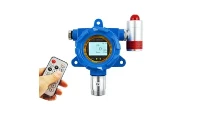
Our company manufactures explosion-proof combustible gas LEL EX gas detector that can effectively detect various combustible gases, minimizing the impact of sulfides and silicides on catalytic combustion sensors. The instrument is waterproof, dustproof, and explosion-proof, and features RS485 Modbus or 4-20mA output.