


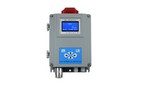
Frozen food factories basically involve ammonia refrigeration. Where there is ammonia gas, there is basically a time bomb buried. In order to eliminate the trouble of this bomb, our frozen food factories have purchased and installed liquid ammonia leakage alarms at the request of the State Administration of Work Safety to prevent ammonia leakage. emergencies such as gas leaks. However, many factories still did not respond to the requirements of the security inspection department, and still went their own way, starting production by luck, without any precautions. It seems that the ammonia leakage explosion poisoning incident has not yet sounded the alarm for these enterprises!
Liquid ammonia alarms are mostly sold in refrigeration workshops of food factories and chemical plants. Because ammonia gas is highly irritating, people can be poisoned if they inhale a small amount. Therefore, places with ammonia gas leakage must follow national regulations and be reasonably regulated. The proper installation of ammonia leakage alarm is related to the safety of life and property. Of course, when the ammonia leakage alarm is detected, we need to choose the most suitable ammonia alarm.
For the detection of liquid ammonia leakage alarms in the industry, the price difference between the detection of combustible ammonia and the detection of toxic ammonia is very large. What is the main reason. Because the biggest difference between detecting liquid ammonia leak alarm and detecting liquid ammonia leak alarm is that the built-in gas sensor is different. In the same environment, in the case of gas leakage, the electrochemical sensor to prevent poisoning should alarm first, thinking that the electrochemical sensor is more sensitive than the catalytic combustion sensor.

Ammonia, Ammonia, NH3, colorless gas. Has a strong pungent odor. Density 0.7710. The relative density is 0.5971 (air=1.00). Easily liquefied into a colorless liquid. It can be liquefied by pressurizing at room temperature (critical temperature 132.4°C, critical pressure 11.2 MPa, or 112.2 atmospheres). Boiling point -33.5°C.
If the ammonia gas explosion is measured, it uses a catalytic combustion sensor with a range of 0-100% LEL. There are two built-in high and low alarm values, one for low 25% LEL and one high for 50% LEL. This is for measuring gas explosions. limit value. If the ammonia gas is poisonous, it uses an electrochemical sensor with a measuring range of 0-100ppm. It also has two built-in high and low alarm values. One is low at 25ppm and high at 50ppm. This is to measure gas trace leakage.
Although the two high and low alarm values are the same, but the sensor types are different, the difference can be large. If ammonia gas leaks, the first alarm is the range of 0-100ppm, because the sensitivity of the electrochemical sensor is higher, and 0-100%lel is the range. The minimum explosion limit value of ammonia gas is divided into 100 equal parts, and then two high and low alarm values are taken for detection, and the reaction is relatively slow.
And for ammonia gas, there are two properties: one is flammable, and the other is toxic. I suggest that users use liquid ammonia leakage alarms if they require ammonia alarms. According to some alarm safety regulations, only if the ammonia gas detection is toxic can it pass, and the ammonia gas detection toxicity is higher than the sensitivity of the flammability detection. The sensor for detection of liquid ammonia leak alarm has two principles: catalytic combustion type and electrochemical type. It is detected by LEL. The detection of liquid ammonia leak alarm is based on the principle of electrochemical detection. It is detected in ppm, mainly for detection of toxicity. The electrochemical sensor has an electrolyte, the reaction is very sensitive, and the detection accuracy is very high, which is several times more sensitive than the catalytic combustion sensor.