


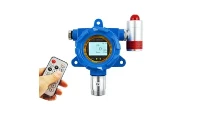

Hydrogen sulfide is a flammable acid gas under standard conditions, colorless, at low concentrations there is a rotten egg smell, at very low concentrations there is a sulfur smell, toxic. It's a potent neurotoxin that irritates the mucous membranes. It is an acute and highly toxic substance that can be fatal in a short period of time if inhaled in small amounts. For the detection of hydrogen sulfide in the environment, is often needed in major chemical enterprises, due to the wide use of hydrogen sulfide, in many chemical enterprises have the production, storage and transportation of hydrogen sulfide, therefore, in the prevention of hydrogen sulfide poisoning and hydrogen sulfide leakage and other security threats, it is necessary to do the corresponding detection of hydrogen sulfide in the environment.
The hydrogen sulfide detector plays a crucial role in industrial production by ensuring workplace safety. Its main function is to detect the presence of hydrogen sulfide gas, a toxic substance that is colorless, flammable, and has a characteristic pungent smell similar to rotten eggs. The detector helps to prevent potential accidents by alerting workers to the presence of this hazardous gas.

The use of hydrogen sulfide detectors is common in industries such as oil and gas, wastewater treatment, and mining. In the oil and gas industry, these detectors are used to monitor the levels of hydrogen sulfide gas in the drilling platforms, refineries, and chemical plants. They are also used in wastewater treatment plants to monitor the levels of hydrogen sulfide produced by biological processes. Moreover, in mining, these detectors are used to monitor the air quality in underground mines, where the risk of exposure to hydrogen sulfide gas is high.
The detectors are designed to trigger an audible and visual alarm whenever the concentration of hydrogen sulfide gas exceeds a certain threshold. This alert allows workers to take necessary measures, such as evacuating the premises and using personal protective equipment to avoid exposure to the toxic gas.
There are various types of hydrogen sulfide detectors available in the market. These detectors are designed to protect the workers and the environment from the toxic effects of hydrogen sulfide gas. The primary function of these detectors is to detect the presence of gas in the air and alert the worker of any potential danger.
One common type of hydrogen sulfide detector is the single gas detector. These detectors are designed to detect only one gas - hydrogen sulfide - and are highly reliable and accurate. They are compact and easy to use, making them ideal for personal monitoring.
Another type of hydrogen sulfide gas detector is the multi-gas detector. These detectors are capable of detecting multiple gases, including hydrogen sulfide, carbon monoxide, and oxygen. They are designed for use in confined spaces and are often used in industrial settings where workers are exposed to multiple gases.

Some hydrogen sulfide detectors are designed to be portable, while others are fixed and mounted in a specific location. For instance, fixed detectors may be installed in a plant or a facility to monitor the presence of hydrogen sulfide continuously.
In conclusion, the industrial H2S gas detector serves as a reliable tool in ensuring workplace safety and preventing potential accidents. Its vital role in detecting the presence of toxic gas in various industrial settings cannot be overemphasized.