


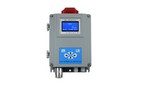
Ethylene Oxide (ETO) gas is widely used in various industries, but its toxic nature necessitates the use of ETO gas detectors for safety. In this article, we will delve into the workings of an ETO detector and explore the principles behind its operation.
Sensing Technologies:
ETO gas detectors employ different sensing technologies to detect and quantify the presence of ETO gas in the air. These technologies include:
a. Electrochemical Sensors: Electrochemical sensors consist of electrodes immersed in an electrolyte. When ETO gas interacts with the sensing electrode, it undergoes a chemical reaction, resulting in a measurable current or voltage change. This change is then converted into a gas concentration reading.
b. Photoionization Detectors (PID): PID sensors work based on the principle of ionization. When exposed to ETO gas, the gas molecules absorb high-energy ultraviolet (UV) light emitted by the detector. This leads to the formation of positive and negative ions, generating an electrical current that is measured to determine the gas concentration.
c. Infrared (IR) Sensors: IR sensors use the absorption characteristics of ETO gas in the infrared region. These sensors emit infrared light at specific wavelengths, and the gas absorbs the light in proportion to its concentration. By analyzing the attenuation of the emitted light, the sensor determines the gas concentration.

Calibration and Baseline:
ETO detectors require calibration to ensure accurate readings. During calibration, the detector is exposed to a known concentration of ETO gas, and adjustments are made to align the sensor's response with the actual gas concentration. This establishes a baseline for accurate detection and measurement.
Alarm Thresholds and Display:
ETO gas detectors are typically equipped with programmable alarm thresholds. When the detected gas concentration surpasses these thresholds, the detector triggers an alarm, alerting individuals to potential hazards. The alarm can be audible, visual, or both, ensuring immediate attention and response. Additionally, some detectors feature digital displays that show real-time gas concentration readings for continuous monitoring.
Maintenance and Calibration:
Regular maintenance and calibration are crucial for the proper functioning of ETO detectors. The sensors may deteriorate or drift over time, leading to inaccurate readings. Routine calibration and maintenance procedures, as recommended by the manufacturer, should be followed to ensure the detector's reliability and precision.
ETO gas detectors play a vital role in safeguarding workers and facilities from the dangers associated with ETO gas exposure. By utilizing sensing technologies and alarm systems, these detectors provide early warnings and allow for timely actions. Understanding the principles behind ETO gas detection helps in making informed decisions about selecting, operating, and maintaining these essential safety devices.