


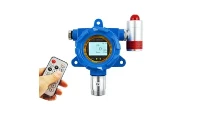

1.Combustible Gas Transmitter Overview
A combustible ex gas detector is a device used to detect the concentration of combustible gases and issue an alarm. They are typically installed in locations prone to combustion and explosion, such as gas pipelines, oil and gas storage facilities, chemical plants, and underground parking lots. The function of combustible gas transmitters is to detect excessive combustible gas concentrations early, protecting lives and property.
2.Point-Type Combustible Gas Transmitters
Point-type combustible gas transmitters are fixed, online monitoring combustible gas detectors. They are usually installed in a fixed location to monitor the concentration of combustible gases in the vicinity of that location. The coverage area of a point-type transmitter is relatively small, generally with a monitoring radius of less than 7.5 meters. This means that each transmitter primarily monitors the combustible gas situation around its installation point. Due to the accuracy and local monitoring capability of point-type transmitters, they are often used in situations requiring precise monitoring of combustible gas concentrations in specific areas, such as chemical plants and oil depots.
(1).Open-Circuit Combustible Gas Transmitters
Open-circuit combustible gas transmitters, unlike point-type transmitters, are typically used for monitoring a wider area, potentially detecting combustible gases through open paths or long-distance transmission. This method is more suitable for monitoring gas concentration changes over large areas or long distances. Open-circuit transmitters are commonly used in tunnels, large warehouses, long-distance pipelines, and other applications requiring large-scale monitoring.

(2).Distinguishing them based on detection principle, monitoring range, installation, and maintenance:
First, according to the basic definition of a transmitter, it is a device that converts physical or chemical quantities into a standard signal. Point-type transmitters, as the name suggests, have a localized detection range, possibly through direct contact with the measured medium. Common examples include temperature and pressure transmitters, which are typically installed at a specific point to monitor parameters at that point. For instance, resistance temperature detectors (RTD) transmitters measure resistance changes to reflect temperature, outputting a standard signal such as 4-20mA.
Open-circuit transmitters, on the other hand, "open-circuit" implies the presence of both transmitting and receiving ends, forming an open path. Methods such as infrared, ultrasonic, or radar do not require direct contact with the medium; they monitor through signal obstruction or reflection. For example, radar level transmitters use microwave time-of-flight to calculate the liquid level, offering wider coverage and suitability for large-area or long-distance monitoring, such as tank level or gas leak detection.
In terms of installation and maintenance, point-type transmitters require proximity to the target point; direct contact may necessitate sensor calibration. Open-circuit transmitters are non-contact, but the optical or signal path must be unobstructed, requiring cleaning of relevant components during maintenance.
Regarding monitoring range, point-type transmitters monitor localized areas, while open-circuit transmitters monitor linear or large areas.
When selecting a combustible gas transmitter, it is essential to consider actual needs, the operating environment, detection requirements, equipment price, and other factors to choose between point-type and open-circuit types.