


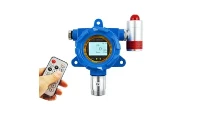

In industries such as chemical, petroleum, metallurgy, and environmental protection, leaks of toxic and harmful gases not only affect production safety but also directly threaten human health and the ecological environment. Hydrogen chloride, as a common toxic gas, is highly corrosive and irritating; a leak can have disastrous consequences.
I. Hazards and Necessity of Hydrogen Chloride Detection
Hydrogen chloride (HCl) is a colorless gas with an irritating odor. It is readily soluble in water to form hydrochloric acid, which is highly corrosive to the respiratory tract, eyes, and skin. HCl can be generated in processes such as chemical synthesis, metal processing, waste incineration, and semiconductor manufacturing. If the concentration in the environment exceeds the standard, it can not only damage equipment but also lead to poisoning and even death. Therefore, real-time monitoring of hydrogen chloride concentration and timely alarm issuance are essential means to prevent accidents and ensure operational safety.
2. Electrochemical HCl Hydrogen Chloride Sensor Working Principle
The working principle of the electrochemical HCl hydrogen chloride sensor is based on the electrochemical reaction between the gas and the electrolyte. When hydrogen chloride gas enters the sensor through the diffusion hole, a redox reaction occurs on the surface of the working electrode, generating a current signal proportional to the gas concentration. Its core components include a three-electrode system (working electrode, counter electrode, and reference electrode) and an electrolyte solution.

(1). Gas diffusion: HCl gas reaches the surface of the working electrode through a permeable membrane or diffusion pores.
(2). Electrochemical reaction: An oxidation reaction occurs at the working electrode, and the resulting protons migrate to the counter electrode through the electrolyte.
(3). Signal generation: The magnitude of the current generated by the reaction is proportional to the concentration of HCl gas; the concentration can be calculated by measuring the current.
(4). Signal output: The sensor converts the electrical signal into a standard output (such as 4-20mA, RS485, etc.) for use by subsequent systems.
3. What are the application areas of HCl hydrogen chloride sensors?
(1). Chemical Industry: HCl is a common industrial waste gas in chemical production processes, requiring detection and monitoring, and necessitating explosion-proof design.
(2). Environmental Protection: HCl is a harmful gas, and the permissible concentration released into the atmosphere from industrial production is strictly limited.
(3). Mining Industry: HCl is generated during metal smelting and ore extraction.
(4). Textile Industry: HCl is monitored during the dyeing and finishing processes of textiles.
(5). Solar Cell Industry: The production process of monocrystalline silicon and its waste gas emissions require strict monitoring and control.
Huafan Technology's HCl gas detector can detect and monitor the concentration of HCl in real time, adapting to various complex industrial environments and application scenarios. This allows for timely detection and handling of HCl leaks or exceedances, ensuring production safety and environmental health.