


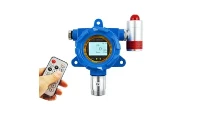

Nowadays, more and more industrial enterprises use gas detection alarm systems. In order to prevent staff poisoning and protect public property, gas detection alarm systems have become a "protective umbrella". However, in several recent accidents, the alarm suddenly "misfired". Objectively speaking, quality factors only account for a small part of the reasons for the failure of the alarm, and most of the reasons are attributed to improper use by people. So how should the alarm be used correctly? Today, I will start with three major misunderstandings to explain how to use the alarm correctly.
Misunderstanding 1: The alarm detector can be used forever
Now most companies buy gas detector, and they will not replace them after installation and acceptance, and even use them beyond the service life. This is very dangerous. Because the alarm is also an electronic product, the circuit boards of electronic products have a service life, and they will age over time. In particular, the life of the alarm sensor has a very precise service life. Therefore, after the unit purchases the alarm, it must be replaced or repaired when the service life expires. It is best to replace the sensor or repair the toxic gas detector every 1 to 3 years. In addition, the alarm should also be regularly dusted and checked for aging or corrosion of the circuit board. Because dust and other harmful substances corrode and cover the sensing elements of the alarm, it will reduce the sensitivity of the sensing elements.
Misunderstanding 2: Gas gas detector do not need maintenance after installation
Any product needs maintenance after purchase, and the gas alarm should be calibrated regularly. To prevent dust from clogging the sensor pores, causing the instrument to be insensitive, and measurement errors and data drift due to untimely calibration. Regular maintenance will extend the service life for the gas detectors.
Misunderstanding 3: Catalytic combustion combustible gas gas detector can measure organic combustible gases (volatile organic matter)
Many customers ignore the use of gas detectors in order to save procurement costs. Many units choose catalytic combustion combustible gas detectors that are not ideal when measuring volatile organic matter. This detector not only has poor detection effect and low accuracy for such gases, but also has a short service life. The correct selection should choose a detector with a PID photoionization sensor. Although the price is slightly higher, the measurement accuracy is high. It can effectively avoid personal injury and take protective measures against gas leakage
Misunderstanding 4: There should be no strong electromagnetic fields (such as high-power motors and transformers) around the gas detector that may affect the instrument's operation. Most gas detectors are not suitable for environments with strong acids, strong alkalis, ultra-low temperatures or high humidity, so you need to pay attention.

Nowadays, more and more industrial enterprises use gas detection alarm systems. In order to prevent staff poisoning and protect public property, gas detection alarm systems have become a "protective umbrella". However, in several recent accidents, the alarm suddenly "misfired". Objectively speaking, quality factors only account for a small part of the reasons for the failure of the alarm, and most of the reasons are attributed to improper use by people. So how should the alarm be used correctly? Today, I will start with three major misunderstandings to explain how to use the alarm correctly.
Misunderstanding 1: The alarm detector can be used forever
Now most companies buy gas detector, and they will not replace them after installation and acceptance, and even use them beyond the service life. This is very dangerous. Because the alarm is also an electronic product, the circuit boards of electronic products have a service life, and they will age over time. In particular, the life of the alarm sensor has a very precise service life. Therefore, after the unit purchases the alarm, it must be replaced or repaired when the service life expires. It is best to replace the sensor or repair the toxic gas detector every 1 to 3 years. In addition, the alarm should also be regularly dusted and checked for aging or corrosion of the circuit board. Because dust and other harmful substances corrode and cover the sensing elements of the alarm, it will reduce the sensitivity of the sensing elements.
Misunderstanding 2: Gas gas detector do not need maintenance after installation
Any product needs maintenance after purchase, and the gas alarm should be calibrated regularly. To prevent dust from clogging the sensor pores, causing the instrument to be insensitive, and measurement errors and data drift due to untimely calibration. Regular maintenance will extend the service life for the gas detectors.
Misunderstanding 3: Catalytic combustion combustible gas gas detector can measure organic combustible gases (volatile organic matter)
Many customers ignore the use of gas detectors in order to save procurement costs. Many units choose catalytic combustion combustible gas detectors that are not ideal when measuring volatile organic matter. This detector not only has poor detection effect and low accuracy for such gases, but also has a short service life. The correct selection should choose a detector with a PID photoionization sensor. Although the price is slightly higher, the measurement accuracy is high. It can effectively avoid personal injury and take protective measures against gas leakage
Misunderstanding 4: There should be no strong electromagnetic fields (such as high-power motors and transformers) around the gas detector that may affect the instrument's operation. Most gas detectors are not suitable for environments with strong acids, strong alkalis, ultra-low temperatures or high humidity, so you need to pay attention.