



As the source of life and a vital industrial element, accurate measurement of oxygen concentration is crucial in many fields. Handheld oxygen analyzers, with their portability, speed, and accuracy, have become a valuable tool for on-site testing. This article will focus on three core application scenarios: measuring oxygen concentrator output concentration, monitoring oxygen content within food packaging, and measuring oxygen concentration in ambient air.
1. Oxygen Concentrator Concentration Analyzers:
For users requiring home oxygen therapy, the oxygen concentration output by an oxygen concentrator is directly related to efficacy and safety. A device with a nominal oxygen output of 93% ± 3% may experience performance degradation due to molecular sieve wear, component aging, or power supply fluctuations.
(1).Instrument Role:
The user connects the instrument to the oxygen concentrator outlet via a thin connecting tube, and the instrument displays the oxygen concentration (%VOL) at the current flow rate in real time.
(2).Technical Features:
High Range and High Accuracy: Specialized for measuring high oxygen concentrations (typically 70%-100%), with an accuracy of ±1% or higher, it can detect even the slightest decrease in concentration.
Low Flow Resistance Design: The specially designed internal airway minimizes airflow resistance, ensuring that the measurement does not affect the normal operation and output flow of the oxygen concentrator, thus ensuring accurate readings.
User-Friendly: Simple operation and intuitive results. Typically equipped with a low-concentration alarm, it automatically sounds an alarm when the reading falls below a safe threshold (e.g., 82%), prompting the user to perform maintenance or replace the device.
Our company's CY-12C handheld oxygen analyzers and ZY-20C oxygen analyzers utilize oxygen sensors imported from the UK. They can monitor oxygen concentration in oxygen concentrators according to customer needs, with accuracies of ±3% and ±1%, respectively.
2. Food Packaging Headspace Analyzer: A "Detective" for Quality Preservation
In the food and pharmaceutical industries, residual oxygen in packaging is one of the main causes of product spoilage and deterioration. The core technology of modified atmosphere packaging (MAP) and nitrogen-filled packaging is to reduce the oxygen content within the packaging.
(1).Instrument Role:
This instrument acts like a "microscopic detective," specifically examining the gas composition in the headspace of packaging bags (bottles, cans, etc.). It is equipped with an extremely fine sampling needle. Upon piercing the package, a micropump extracts a small amount of gas, which the sensor rapidly analyzes and directly displays in %Vol or ppm.
Our company's ZY-20C oxygen analyzer, combined with a sampling needle and syringe, can measure the oxygen concentration within packaging bags. The detection range is 0-100% vol, with a resolution of 0.01% vol at low concentrations.
(2).Technical Features:
Non-destructive Testing: The sampling needle is extremely fine, creating a negligible hole upon insertion, which does not affect the packaging seal or the shelf life of the remaining product, achieving "minimally invasive" or "non-destructive" testing.
High Sensitivity and Accuracy: The instrument can accurately detect extremely low oxygen concentrations below 0.1%, which is crucial for controlling product quality and verifying the sealing performance of packaging lines.
Hygienic and Robust: The probe is typically made of stainless steel, making it easy to sterilize and preventing cross-contamination. The instrument's robust structure is suitable for production workshop environments.
Summary: It is an indispensable part of the quality control system, safeguarding product freshness and safety from the source of the production line.
3. Ambient Oxygen Detector: A "Sentinel" for Life Safety
Abnormal oxygen concentrations are a major safety hazard in confined spaces (such as ship cabins, underground pipelines, and fermentation tanks) or locations where gas leaks may occur (such as laboratories and nitrogen flushing areas). Concentrations that are too low (<19.5%) can lead to asphyxiation due to lack of oxygen; those that are too high (>23.5%) increase the risk of explosion.
(1).Instrument Role:
This type of instrument serves as a "loyal sentinel" for maintaining industrial safety and personnel health. It uses diffusion sampling to continuously monitor the ambient oxygen concentration.
(2).Technical Features:
Real-time Monitoring and Alarm: Capable of 24-hour continuous monitoring, it features high and low concentration alarm thresholds. If concentrations become abnormal, an ultra-high decibel alarm and a flashing bright light will immediately trigger, alerting personnel to evacuate immediately.
Intrinsically Safe Design: Many professional models are intrinsically safe (Ex) certified, allowing safe use in flammable and explosive environments without becoming an ignition source.
Rugged and Durable: Highly dustproof, waterproof (IP rating), and drop-resistant, it can withstand a variety of harsh industrial environments.
Data Logging: Advanced models support data logging for easy traceability and analysis.
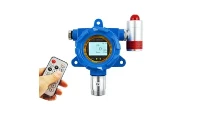
Our company produces portable oxygen concentration detectors and fixed oxygen concentration detectors, which can detect the oxygen concentration in the air and send alarm signals if it is too low or too high.